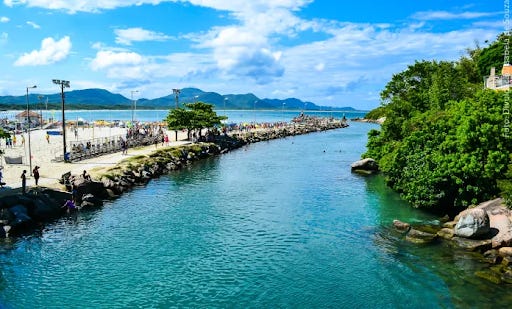


When you hear of "Ilha da Magia" in Brazil, you know people are talking of Florianópolis.
An island surrounded by paradisiacal beaches and many things to do in nature like hiking, surfing, diving...
Florianópolis is sort of a “Brazilian Hawaii”
A place with lots of beautiful beaches, great nightlife, and stunning landscapes. Oh, and the great looking Brazilian girls don’t hurt, either.
Florianópolis, Brazil 🇧🇷

Population:
Florianópolis has a permanent population of 574,200 inhabitants and is the second most populous city in Santa Catarina after Joinville. The metropolitan region of Florianópolis has around 1,209,818 inhabitants.
In the summer, as well as all other coastal cities, Florianopolis receives tourists coming from nearby cities in search of its beautiful beaches — greatly increasing its population in this season.
Weather:
Florianopolis is located on the coast in the state of Santa Catarina, with one part being the continental city, which is small, and the other part the large island of Florianopolis.
The climate in Florianópolis is humid subtropical.
The average annual temperature is 21 °C. Summer is warm and hot, and winter is cool. The rainiest period is between December and March.
The minimum temperature in the coldest months (June, July, August) ranges from 8 to 13 °C and the maximum temperature in the hottest months (December, January, February) ranges from 29 to 34 °C.
In summer, the temperature is perfect for enjoying the beaches and cooling off in the sea.

Why Visit Florianópolis, Brazil?
I would say that there are three main points that attract tourists to Florianopolis:
The beaches:
Florianópolis is 97% an island, which means that it has a huge variety of beaches all around.
You can go to the beaches in the north like: Jurerê Internacional, Praia dos Ingleses, Canasvieiras.
You can go to the beaches in the central region of Florianópolis like: Praia Mole, Praia da Joaquina, Praia do Campeche.
And finally the beaches in the south of Florianópolis such as: Praia do Matadeiro, Lagoinha do Leste, Praia da Armação.
These are the main ones, but there are many more beaches to be discovered.
Nature Retreats and Hikes:
Florianópolis is a very environmentally preserved city with beautiful places isolated from civilization.
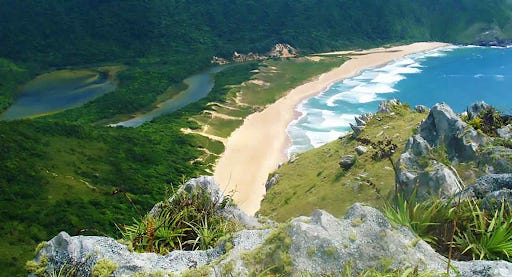
It has several natural spots such as Lagoa da Conceição, Lagoa do Peri Municipal Park, Lagoinha do Leste, which has no buildings and can only be reached by a 2-hour hike, Campeche Island, among other natural beauties that the city provides.
Historical Center and Santo Antônio de Lisboa:
Both would be the old and historic districts of the city. The historic center is home to the great Florianópolis Public Market, the Cruz e Souza Palace, the Florianópolis Cathedral, and Praça XV, all dating from the end of the 18th century, with a colonial Azorean architecture.
Santo Antônio de Lisboa is a neighborhood that began to form in 1648 with the arrival of the first Portuguese in the area. The entire neighborhood has this colonial Azorean architecture that gives a different charm to the region.
The main points of the neighborhood would be the Nossa Senhora das Necessidades Church, the Feira das Alfaias, the Santo Antônio de Lisboa beach and the “Sunset route”

How To Get to Florianópolis, Brazil
Unless you’re already in the Brazilian south, you’ll be flying in.
Florianópolis has the biggest airport in Santa Catarina, being located in the south of the island. Besides the Florianopolis airport, there is also the Navegantes airport, an hour and a half away from Florianópolis by car.
There are international connections to:
Argentina — Buenos Aires
Chile — Santiago
Uruguay — Montevideo
Unless you are in the Southern Cone, you’re more likely to fly in to Brazil’s major airports, like São Paulo or Rio de Janeiro, and take a connecting flight to Florianópolis.
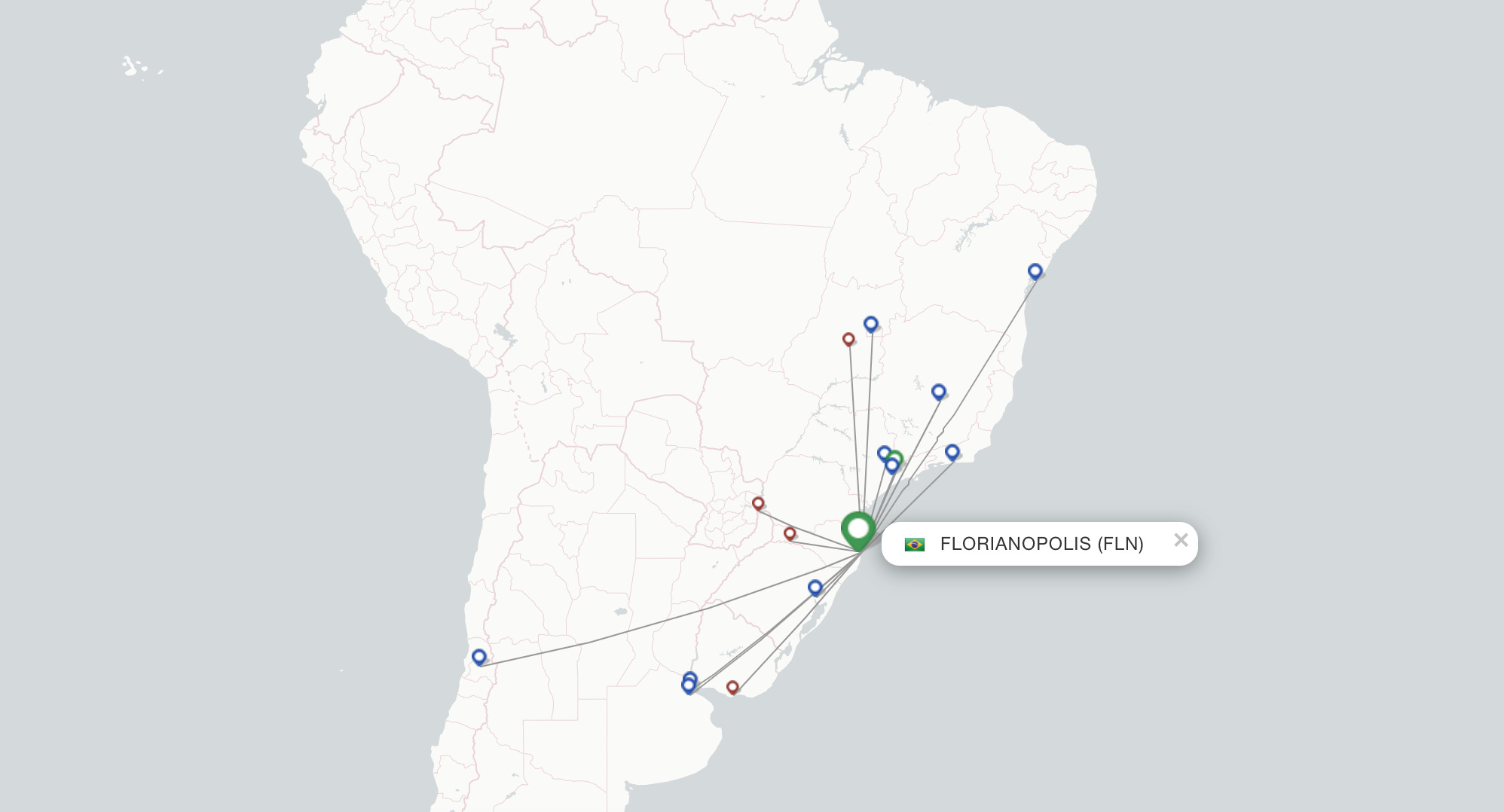
More detailed flight info here.
Best Neighborhoods in Florianópolis, Brazil
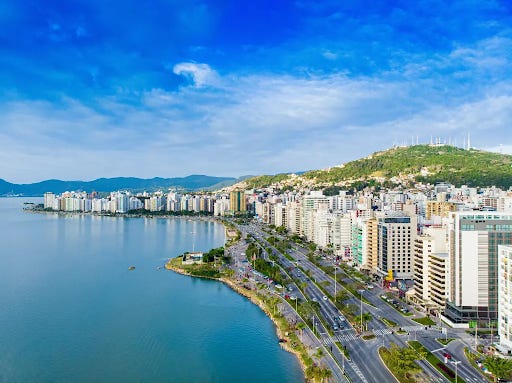
The top three neighborhoods of Florianópolis are:
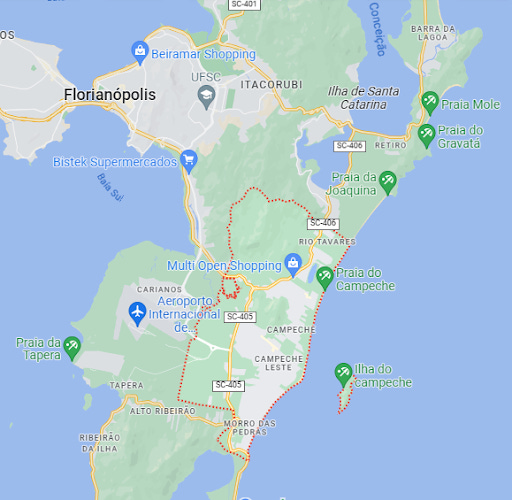
Campeche
It is a neighborhood that has a complete infrastructure, with supermarkets, stores, restaurants, schools, hospitals, and other essential services - in addition, it is located near the airport and the city center, making it easy to access other parts of the island.
It is considered a quiet and safe place to live, with low crime rates and a healthy lifestyle, due to the outdoor activities and healthy food offered by the restaurants in the region.
The neighborhood is surrounded by preserved green areas, such as the dunes of Praia do Campeche, the Municipal Park of Maciço do Morro da Cruz, and the Municipal Park of Lagoa do Peri, which offer ecological hikes, waterfalls, picnic areas, and other outdoor activities.
You will find beaches of white sand and crystalline water, such as Praia do Campeche and Praia da Joaquina. These beaches are ideal for surfing and kitesurfing, as well as being great for hiking and sunbathing.
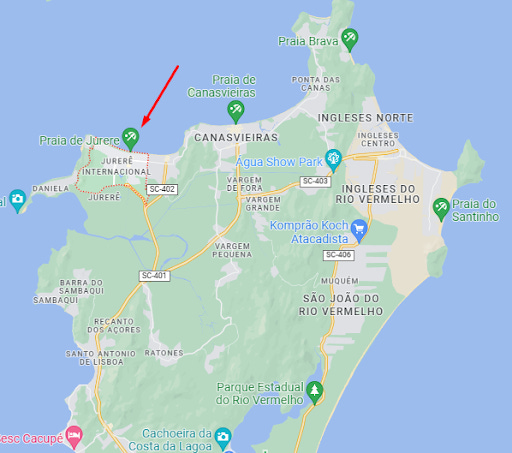
Jurerê Internacional:
The neighborhood has a high quality of life, with a pleasant, clean, and well-kept environment. It offers several high-end leisure options, such as clubs, tennis courts, golf courses, and spaces for outdoor activities.
It has a complete infrastructure, with restaurants, bars, stores, supermarkets, and other essential services. It is located near the city center, making it easy to access the mainland and other parts of the island.
It is also close to Santo Antônio de Lisboa for the historical architecture enjoyors.
It is considered a very safe neighborhood, with low crime rates. This makes it a great place for those seeking security and tranquility.
It has beaches with white sand and crystal clear water, such as Jurerê Beach and Jurerê Internacional Beach. These beaches are very frequented by tourists and local residents.
It is also the most expensive neighborhood in the whole city.
Centro:
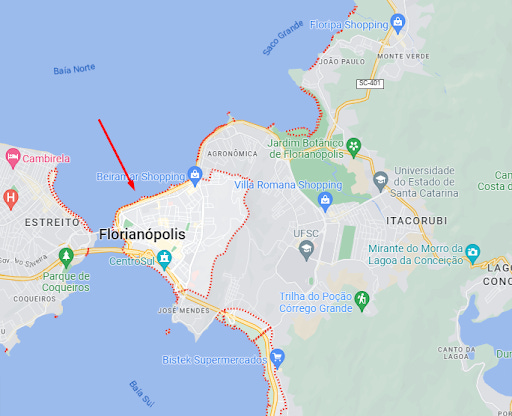
The center would be the most walkable of all three, as it has the highest density of infrastructure, with several services such as hospitals, pharmacies, supermarkets, schools, banks, and other commercial establishments.
It is the heart of the city and is located in a strategic area, close to several historical tourist attractions, restaurants, shopping malls, and other essential services.
In addition, it is easily accessible by public and private transportation. It is one of the oldest areas in the city and has many cultural and historical attractions, such as the Public Market, the Metropolitan Cathedral, Praça XV de Novembro, and the Álvaro de Carvalho Theater.
It also offers several nightlife options, with bars, pubs, concert halls, and nightclubs. The center's nightlife is quite busy and is one of the neighborhood's main attractions.
The center is a very diverse neighborhood, with a mix of architectural styles, gastronomy, and cultural activities. This makes the neighborhood very interesting for those seeking a multicultural experience.
Unfortunately, you don't have any good beaches here. You have to take a bus or an Uber of at least 15 minutes to the nearest beach.
These would be my top 3 areas.
However, there are three other neighborhoods that we couldn’t not include here, which we’ll count as honorable mentions.
Barra da Lagoa:
Not to be confused with Lagoa. This is Barra da Lagoa. This is small area with fishing village vibes, quite different from the urbanization of Jurerê. I would consider it as an alternative to Campeche. Lots of gringos around here, good if you're looking to connect with expats. It's beautiful, calm, but also has good parties. Here you have beach and are not too far from the Lagoon.
Lagoa:
The Lagoa da Conceição is a huge lagoon in the center of the island of Floripa. As such, it neighbors many neighborhoods — Campeche, Barra da Lagoa and isn’t even too far from Santa Monica. The lagoon is home to yachts and boats, docked in multiple marinas.
If you are staying by the “core” of Lagoa, you will be close to Praia Mole and Joaquina, two great beaches. The Dunes of Joaquina will also be close by.
Lagoa da Conceição is somewhat of a more family-friendly area, with bars for drinking beer with live music, stand up paddling, boat trips, kayaking etc.
Santa Mônica:
An alternative to the center. You’re still close to the center, but right by the highways that will take you to the Lagoon or the north of the island. Here you have loads of bars and gastronomy, the municipal park nearby and, most importantly, all the universities. If you’re looking to mingle with the student crowd, I know of no better place.
Cost of Living in Florianópolis, Brazil 🇧🇷
The cost of living in Florianópolis can vary greatly depending on each person's lifestyle and choices.
In general, the city is considered one of the more expensive in Brazil, especially in relation to the cost of housing and food.
Airbnb Apartment in Best Areas: $900-2400 USD a month
Hotel in Best Area: $600-3,000 USD a month
Maid: $300-600
Grocery Store: $500-800
Eating Out / Delivery: $600-900
Gym: $20-60
BJJ / MMA: $20-80
Partying / Dating / Social: $400-800 USD
Cell Data: $10-30
It’s possible to live very comfortably in Florianópolis as a tourist for less than $2500 USD per month.
Yes, it is possible for a tourist to live comfortably in Florianopolis for less than $2500 per month. With this budget, it is possible to have access to comfortable accommodations, public transportation, food, and leisure, without having to give up many things.
You can have some meals in more sophisticated restaurants, visit tourist attractions, play sports, and have access to other leisure activities in the city.
However, it is always important to research the options available and choose the activities that best suit your budget.
Also, it is important to keep in mind that costs may vary depending on the time of year.
For example, in the summer prices increase a lot!
The location and the types of accommodations play a huge role too. For example, don't stay in Jurerê Internacional on a budget.
The means of public transportation in Florianópolis would be buses and for some areas — boats.
The two mayor ride-sharing services in the country are Uber and 99 Taxi.
Each ride will cost around $4-15 USD within the city limits. For going to other cities, just take a bus or rent a car.
Safety in Florianópolis, Brazil 🇧🇷
Quite safe.
Santa Catarina is the state with the second lowest homicide rate per capita in Brazil. Violent crime isn’t a big issue, but as always, I’d take basic safety precautions when walking out at night.
In the summer, people come from everywhere, so you have to pay attention to your belongings when you go to the beach. Nobody will assault you, but they can pick your phone or wallet when you are distracted.
Also, here you won’t see bums and crack addicts everywhere like in many areas of São Paulo and Rio de Janeiro.