



Christ atop the Corcovado. Amazing nature. Fantastic beaches. Bunda of all colors, shapes and sizes. Insane nightlife.
Rio de Janeiro, Brazil is considered by many the best beach city in the world. Yet, it is not as popular of a destination among expats/gringos as Medellín, Buenos Aires or CDMX
Why so?
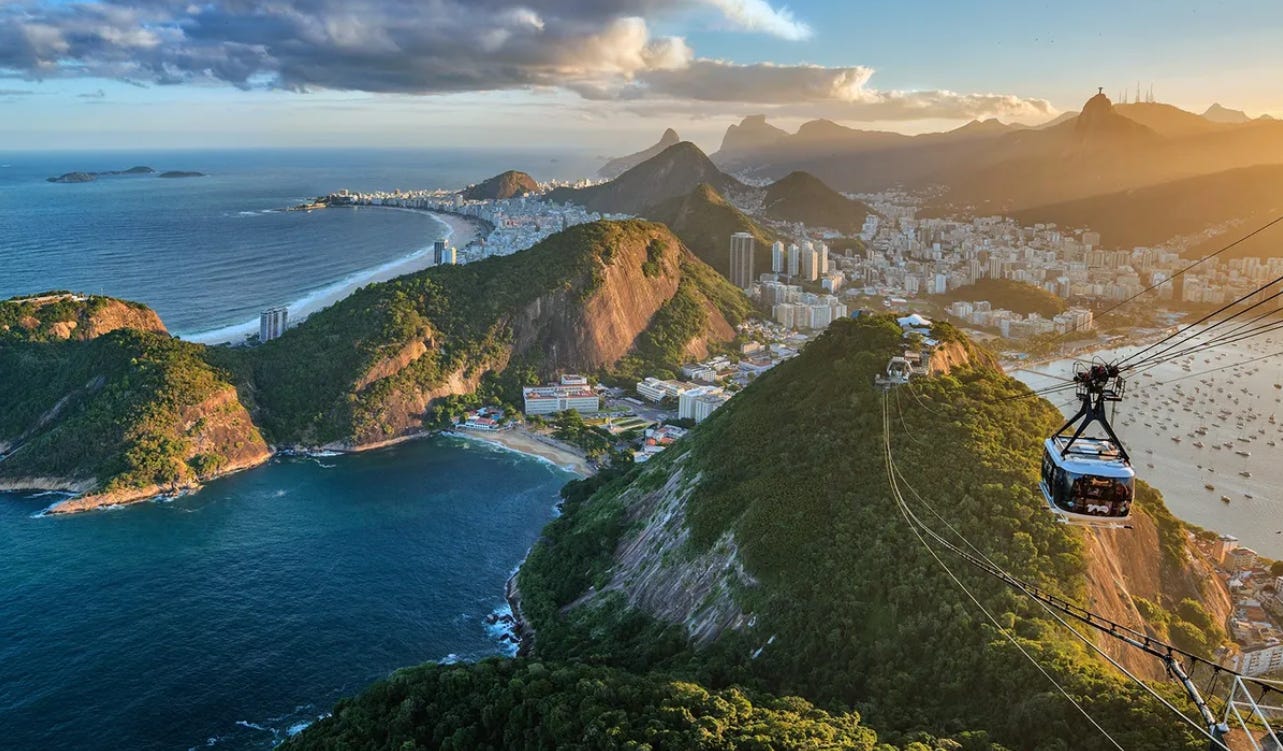
In today’s post, I’m here to break down Brazil’s second largest city and talk a little bit about my own personal experience living in the Cidade Maravilhosa.
Rio de Janeiro, Brasil
Population:
12,280,000 in the metro area
Weather:
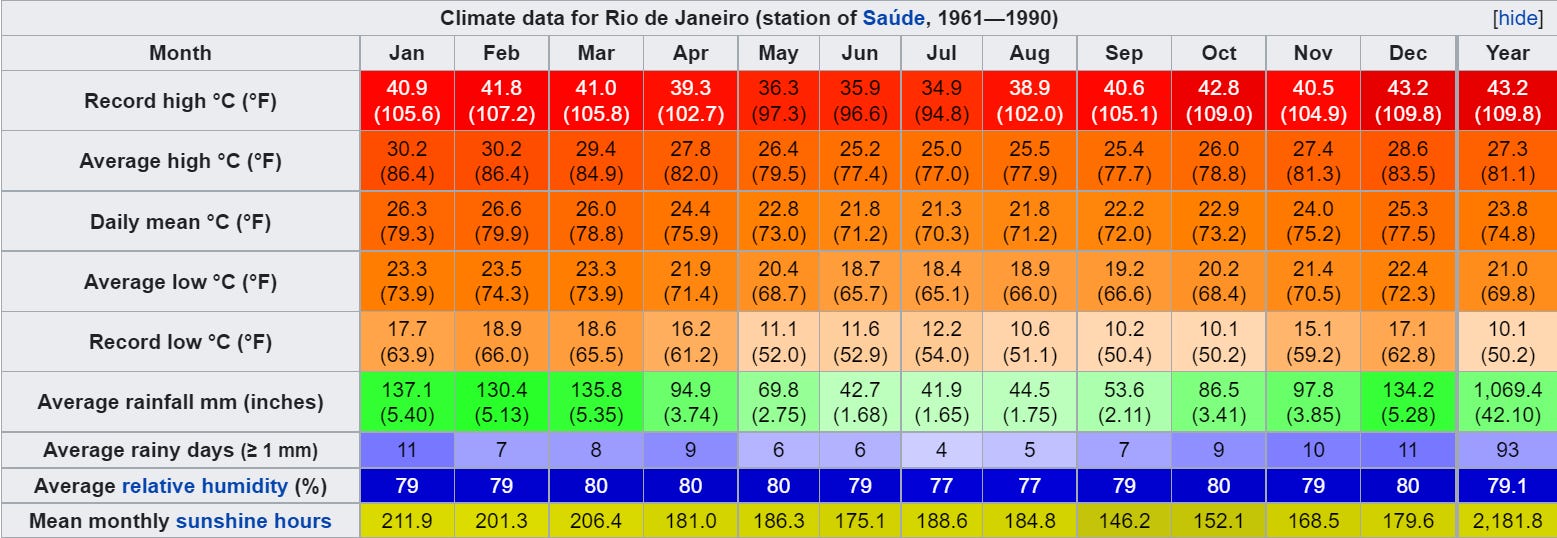
Rio’s weather is tropical. Humid hot. You are surrounded by the Atlantic Ocean in one direction and jungle in all others, so it’s bound to be humid.
The daily mean is about 23.8 degrees, peaking at 25-26 degrees in the summer months (December-March) and finding its lowest in the winter (around 21).
The summer months are also when it is the most rainy – not Costa Rica rainy, luckily. You can expect around 10 days of rain a month in summer and about 5 in winter.
I’m not gonna lie. During summer, Rio is hot. You’ll sweat when going outside. Still, it’s the best damn time to be around.
Why, you ask? Because that’s when everyone is in Rio.
Brazilians dream of spending their NYE in Rio. Vacationing in Rio. Going to Carnival in Rio.
If you are looking to find mates or just, well, “mate”, summer is when you’ll find the most people in the city.
It will be hot, but that’s why you have people selling cold Mate absolutely everywhere. And also why Brazilians have ACs. And why you are in a beach city, after all. Go for a dive.

Mate Gelado with Lemon. Tastyy
Still, if you prefer a milder climate, Rio is large enough that there is always something going on. Winter will be less crowded and cheaper, while still offering lots to do.
Why Visit Rio de Janeiro, Brazil?
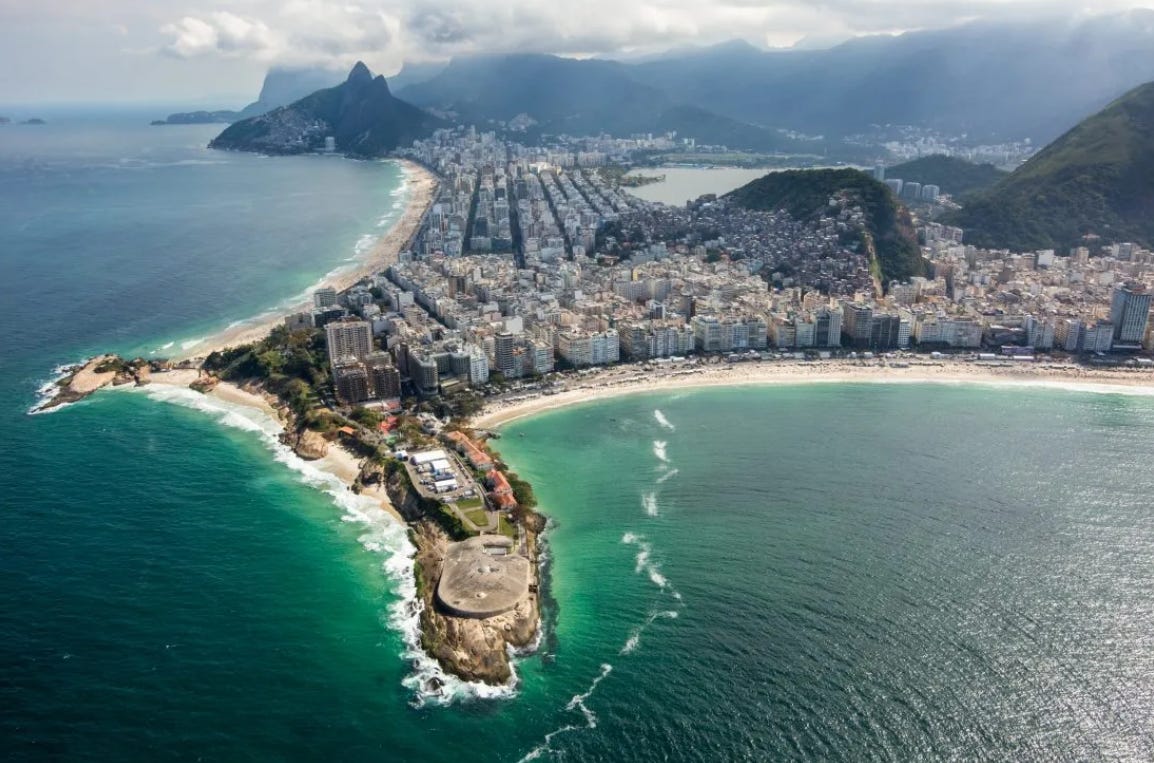
Getting straight to the point: You are going to Rio for the best urban beach area in the world. Zona Sul.
Here, you have all you could ask for. A walkable, dense urban area with:
Great beaches
Amazing nature nearby
World-class nightlife
Reasonable safety
Global cuisine
Historical monuments, museums and churches
Best infrastructure and logistics after São Paulo
It is simply impossible to get bored in Rio.
Looking inwards, you have amazing waterfalls, climbing routes, hiking trails and sightseeing spots.
In the city itself, Rio offers all that you’d want in a Latin American city. A variety of nightlife, museums, historical architecture, landmarks, parks, plenty of dining options, etc.
Looking outwards, you have DOZENS of great beaches just in the city of Rio. A perfect place to do some surfing, windsurfing, parasailing, or paragliding.
As a city with beach culture, people take great care of their bodies. Along with Balneário Camboriú, Rio has the best bodies I’ve seen in Brazil.
It is also normal to walk around in flip flops, beach shorts or tank-tops. You could have just come over from the beach after all. Great for sunmaxxing and avoiding bad attention.
Unlike the South, Northeast or the North, which have predominant ethnic groups, as the symbol of Brazil, Rio has truly population, with women from all ethnicities.
As its cultural capital, whatever you think about when you think about Brazil, you can find here. Samba and Bossa Nova are both from Rio.
Along with São Paulo, here is where you will find the most shows, concerts, events and the like, be them national or international.
It’s also a city where your gringo status still holds power.
While in most major Latin American cities being a gringo isn’t too impressive these days, in all of Brazil it still is.
Local girls have a reputation for preferring gringos over locals, and I have to say that I saw and experienced plenty of evidence to confirm this without a shadow of a doubt.
Lastly… there is just this chaotic energy to it. Whenever I’m in Rio, things are just *happening* around you all the time.
It’s hard to explain, but there’s a vibe to the city that anything can come up at any time. Good or bad, random stuff pop up all the time.
If you don’t handle uncertainty well, I would not go to Rio. If you enjoy the spontaneity and thrive in it, it is a damn good place.
How to Get to Rio
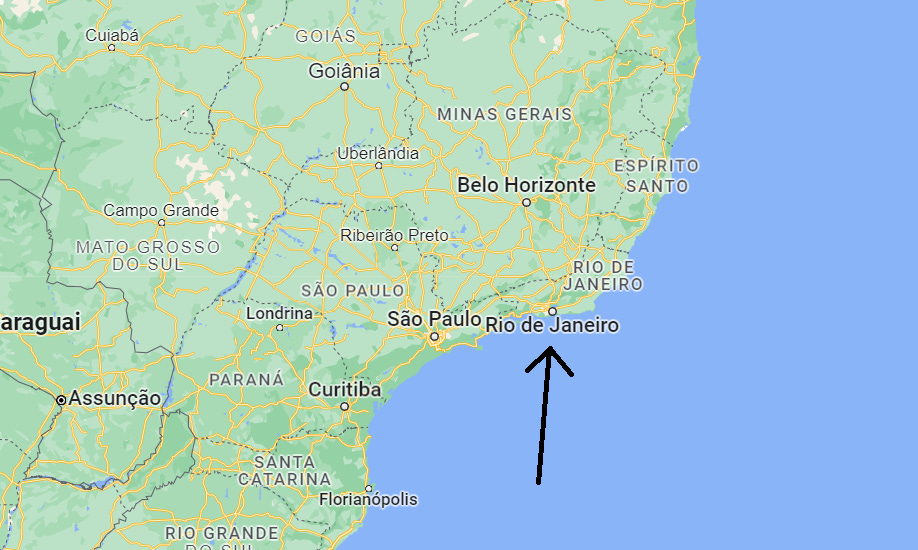
Getting to Rio isn’t that hard. If you are coming from North America, it surely will be a longer flight than to Mexico or Colombia, but not more than to Buenos Aires.
Here are a handful of US cities offering direct flights:
Miami
Atlanta
Houston
New York
Some European & Middle Eastern cities:
Dubai
Lisbon
London
Madrid
Paris
Amsterdam
Some Latin American cities:
Bogota
Santiago
Panama City
Buenos Aires
São Paulo
Asunción
Check all direct routes here: Flights From.
There are also many internal flights, so if you want to hop over to São Paulo, Belo Horizonte, Curitiba, Floripa — it’s cheap and easy to do so without suffering a bus trip.

Best Neighborhoods
If you happen to arrive to Rio during the day, as you begin your descent into Santos Dumont or Galeão Airport, you will see a metropolitan area that is ugly, sprawled, undeveloped.
As you get closer to the city, you start seeing more developed, nicer areas. Zona Sul or Barra, depending on where you’re flying in from.
But you’ll notice that… the poor favelas are also there, right next to the upscale areas. Source of many pictures on inequality…
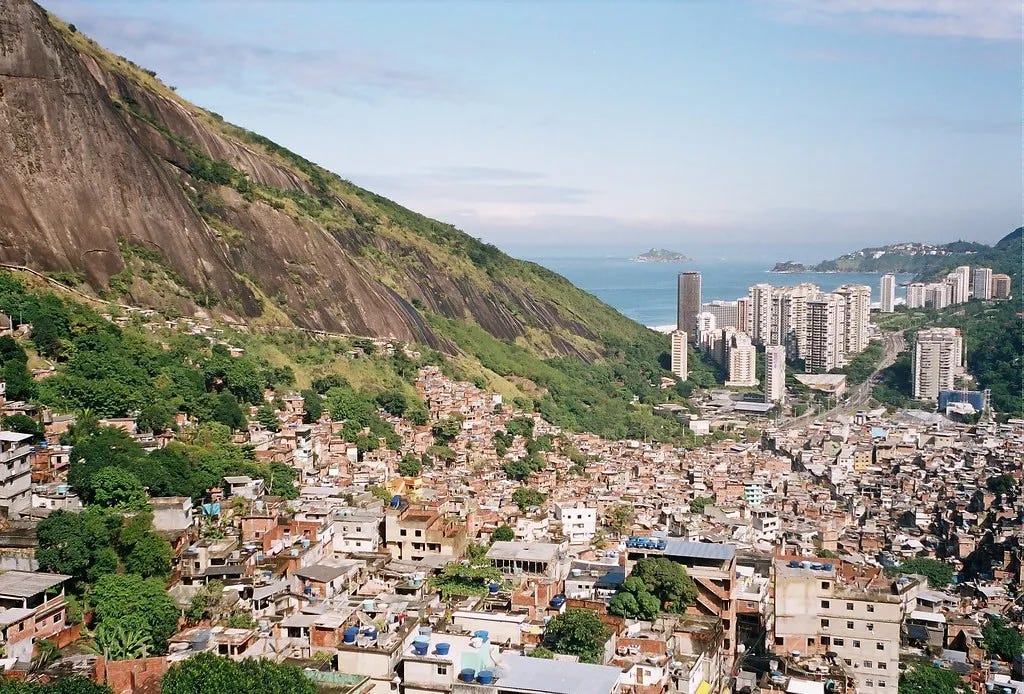
Rocinha and on the back, São Conrado.
Indeed, the favelas and the upscale areas are neighbors.
Right next door to the most affluent neighborhoods in the country, you have zones controlled by the mafias and the drug cartels.
Zones where police can’t or won’t go in.
Just how Rio works…
Alas, let’s dive into the top areas.
First, you need to understand the following.
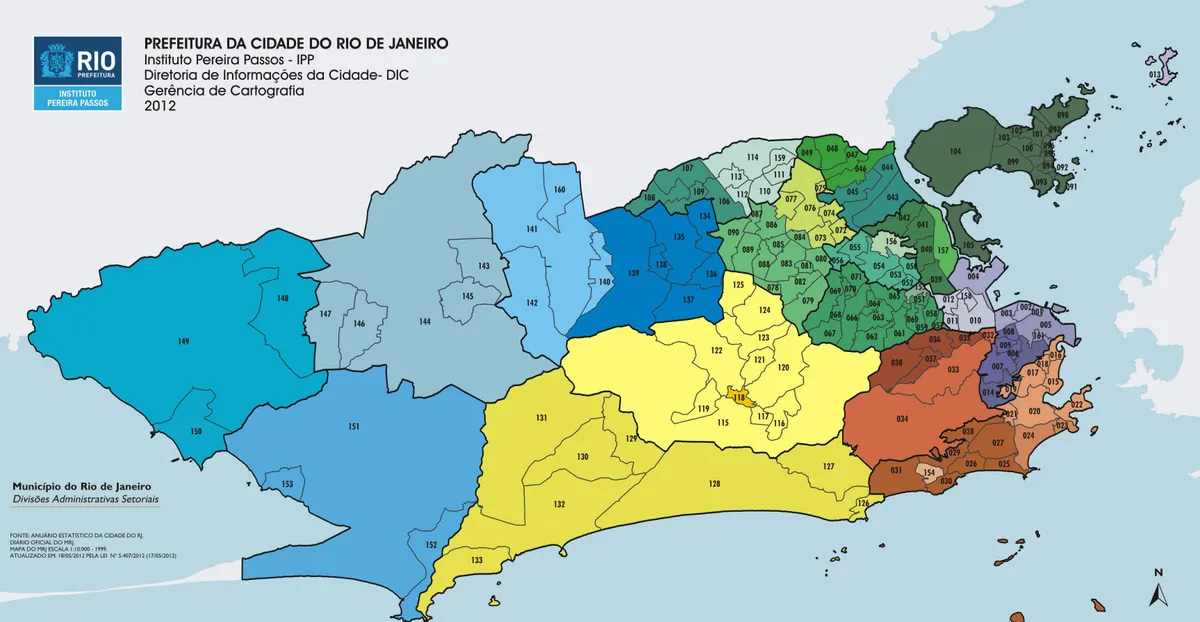
The city of Rio is large as fuuuuck
The city of Rio is divided into the following areas: The North, South, West and Center. There is no East, as to the East of Rio we have the city of Niterói across the bay.
Let’s take a deeper look at the options.
North Zone:
With the exception of Ilha do Governador, it is violent. Don’t stay here. Ditto for the neighboring towns except Niterói: Hell.
The only place I would consider in this area is Ilha do Governador if I want to live in a calm place in a little bubble. It is close to the airport (GIG) and has basically everything for a daily life, but is far from *anything* else.
Tijuca (not to be confused with Barra da Tijuca) could be an option too. Active nightlife, metro connection, and not far from Maracanã stadium or Quinta da Boa Vista park. Still, if you are a gringo, you can probably afford to live in a safer area with beach.
Center:
Where so much of Rio’s imperial historic buildings can be found. Also has the only trams (VLT) in Rio. No reason to stay here. It is not safe. Come during the day for the tourism or maybe for the nightlife, but don’t stay here.
West Zone:
One of Rio’s safer areas and the source of morality in this degen den. Here, you will find the USA in Brazil: Car-centric, gated-community style urbanism.
The west zone is responsible for electing right wing candidates and it is so large it could be divided into three areas.
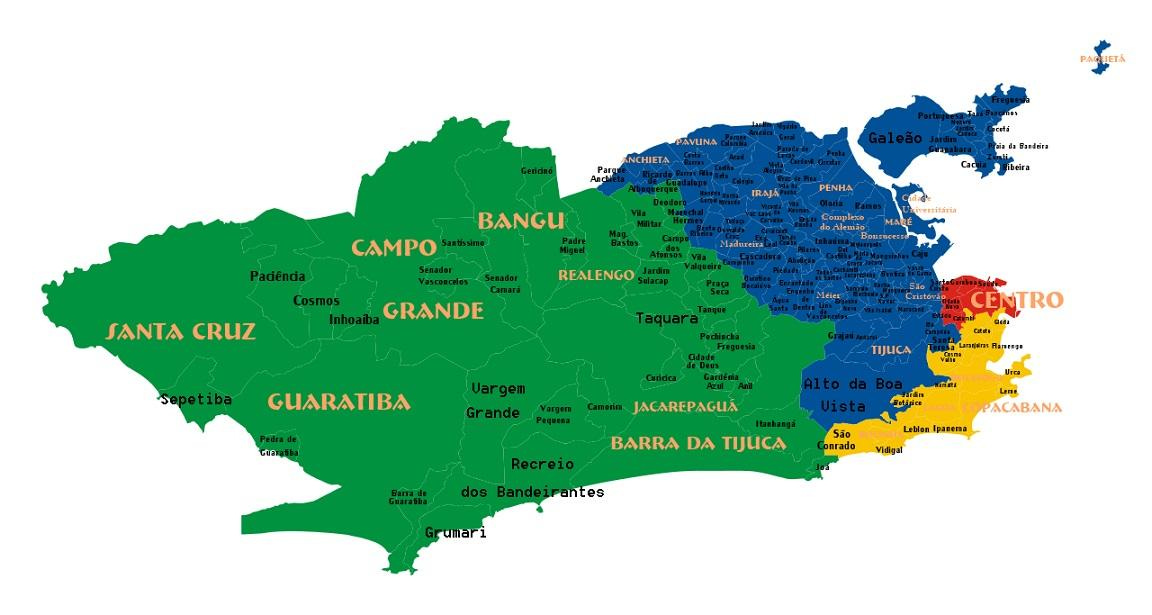
The West Zone in green.
Barra da Tijuca, aka Barra:
Where you want to be in the West Zone. The only place that holds a candle to Zona Sul. Here is where the self-made rich live.
Overall, the best beaches in Rio are in Barra, as well as the best malls.
Sadly, it is not walkable and not so well-connected to the rest of the city, with the exception of Jardim Oceânico, which has a metro station and is quite walkable.
That said, you could live in Rio and never have to leave Barra. You have everything over there.
Jacarepaguá & Freguesia:
Mafia-controlled areas. Cheap and exceptionally safe. No beach and or metro connections, but quick car connection to Zona Norte. Would stay here if no has moneys for Zona Sul or Barra.
The rest:
Like the former, but more isolated. Wouldn’t stay here.
And finally, we get to the heart of Rio: The South Zone
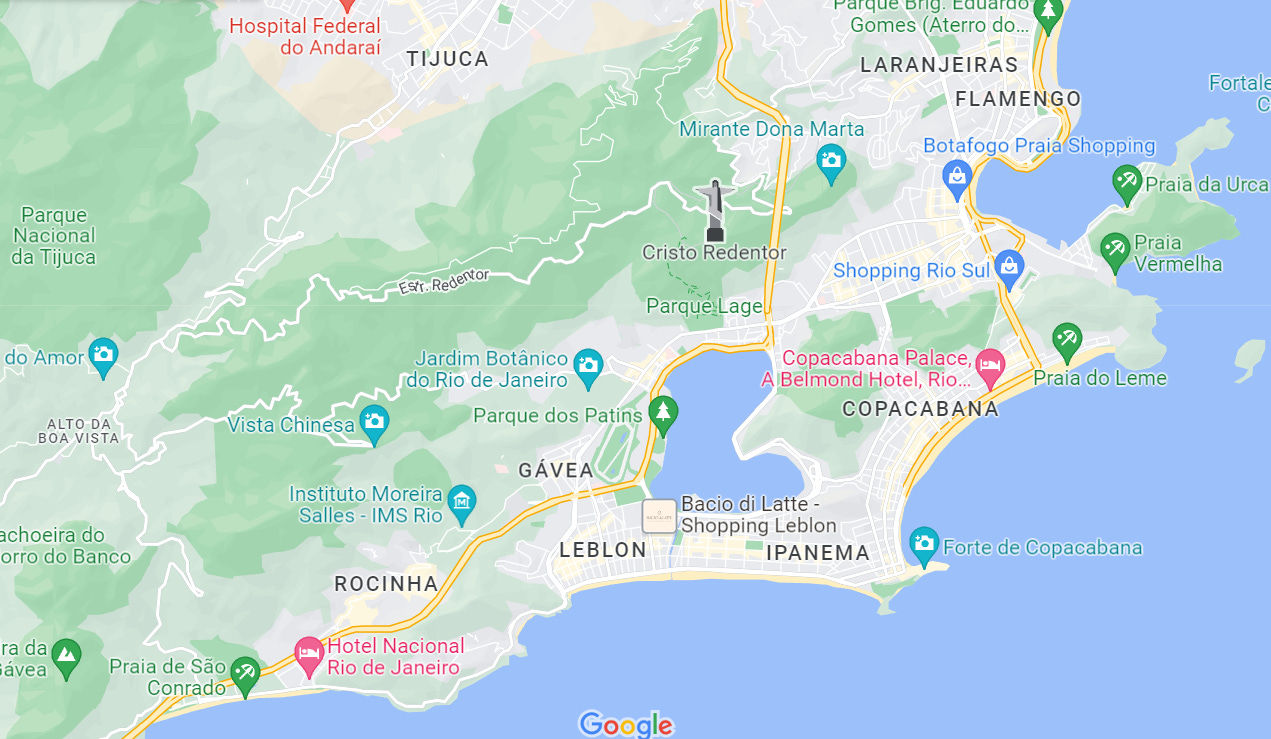
Map of the South Zone
Zona Sul:
If you can afford it, this is the place to be. Where the old-rich families in Rio dwell. 600.000 people live here, the most expensive zone in Rio. Also one of the safest.
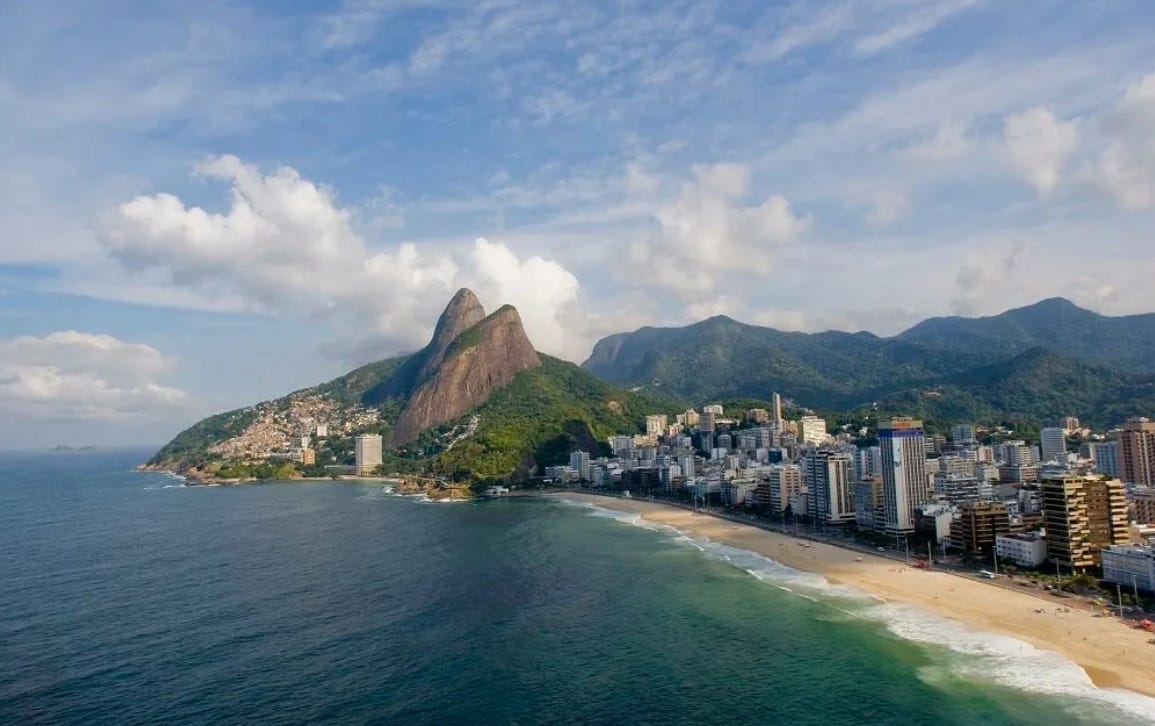
Zona Sul has it all. Beach, nature, the Rodrigo de Freitas Lagoon, tourist attractions like the Christ and the Sugarloaf and top tier nightlife.
Unlike Barra, the south zone is walkable. Restaurants, gyms, malls, markets, all you need for your daily life can be found less than 15 minutes away while walking.
The best urban beach area in the world.
Zona Sul can be divided up in different areas as well. My mental map is the following:
Ipanema, Leblon: The best neighborhoods, undisputed. Great beach, great logistics, safe, great overall. Alas, the most expensive m² in Brazil.
Copacabana: The other beach neighborhood with great logistics, as it also has a metro connection. Pricey, but less safe than Ipanema-Leblon, touristy af and the vibe is just off.
Gávea, Urca, Jardim Botânico, Catete: Great, safe neighborhoods, but no metro station, so the logistics aren’t as good. With the exception of Urca, none of these have beaches.
Botafogo, Flamengo: On the cheaper end in Zona Sul. There is beach, but it isn’t batheable (it’s water from the bay). Has metro, strong logistics and good nightlife.
São Conrado: Has a beautiful beach and metro, but it is expensive and isolated from the rest of Zona Sul.
Where to Stay in Rio?
Now that I told you about the different areas, you might be asking where to stay. My take on it is:
If money is not a consideration: Ipanema or Leblon. The best neighborhoods, period.
If beach or surfing is your highest priority: Barra da Tijuca, with Jardim Oceânico being the best-connected area, and Recreio dos Bandeirantes having amazing beaches. - In Zona Sul, Ipanema is close to good spots, just not as consistent in the summer.
If neither fit you, then I’d consider:
Short term stays, want to get to know the city well, move around every day: Pick an area with metro and top logistics. Botafogo and Flamengo are well connected, have beach for doing sports and have good nightlife.
Copacabana is also well connected. Not a fan; I’d try to stay as close to Ipanema as possible (aka Copanema).
Longer stays, prioritizing great quality of life overall: My pick when I first spent 3 months in Rio was Gávea.
No metro or beach, but it’s safe, there’s good nightlife, it’s walkable and has the Lagoon close for bike rides and walks. Lagoa would also fit here.
Both are also in the core of Zona Sul, so that an Uber ride to Leblon, Ipanema or Botafogo is not far.
Urca is a safe option with beach, but no metro. A short Uber ride to Botafogo and Copacabana.
As mentioned, Ilha do Governador will be like Botafogo and Flamengo in having a non-batheable beach, and like Gávea in being safe and having nice nightlife inside. Terribly disconnected from the rest of the city, but I know people who just live here long term and love it.
Cost of Living
Rio is not a “cheap” destination by Latin American standards. While it’s not as expensive as Montevideo, Uruguay or Santiago, Chile, it’s certainly more expensive than Bogota, Colombia or Buenos Aires, Argentina.
Rio can be quite cheap if you are staying in cheap areas (like Jacarepaguá), but then you’ll have to make sacrifices on either logistics, beach or safety. No way around it.
If you are staying in Ipanema, Leblon or Jardim Oceânico, it will certainly not be cheap for Latam standards.
Here’s an approximate breakdown of what you can expect to spend in Rio.
Airbnb Apartment in Best Areas: $1000-3000 USD a month
Hotel in Best Areas: $3000+ USD a month
Maid: $400-600
Grocery Store: $400-600
Eating Out / Delivery: $400-600
Gym: $50+
BJJ / MMA: $60+
Partying / Dating / Social: $600-900 USD
Cell Data: $20
Eating and drinking at restaurants in the poshier nightlife areas is quite pricey – we’ll cover these soon. However, even in Zona Sul, if you go to the less poshy areas like Botafogo or Flamengo, the prices lower considerably.
You could like in Rio for less than $1000 a month, and you can also live here spending over $10000. As Brazil’s top tourism and entertainment destination, the sky is the limit when it comes to spending. That said, $3000 a month should get you a good life in the top areas.
Is Rio Safe?
Lol. No, man. Rio isn’t safe.
That said…
If you stick to the better areas and follow safety precautions, you should be fine.
After all, do you think Brazil’s cultural elite – the TV stars, musicians and so on – would be living here if everyone was getting mugged and shot all day?
Pull up a Rio violence heatmap and you’ll see that violent crime is more predominant in the Center and North Zones, and skyrockets in the nearby cities like Belford Roxo or São João de Meriti.
In Zona Sul and Barra, if crime befalls upon you, it’s likely for it to be something like pickpocketing or an arrastão – when a group of criminals go through a beach like Copacabana stealing everyone’s phones and wallets.
Worst thing that happened in my vicinity during my time in Rio (staying in Zona Sul) was a friend getting pickpocketed at a party, but at that time he was quite drunk and had let his guard down.
One of my best friends, who is from Jacarepaguá, was never robbed in his life.
Here’s your guide:
Stick to living in the better areas. Zona Sul or Barra, preferably.
Stay in a place with a porteiro (doorman). Scope is not a problem here, but it’s still advised to get a porteiro.
Don’t walk around at night. Just take an Uber or the metro (if still open, it closes at midnight). They’re cheap anyway.
Don’t flex. This is a city of extreme inequality. Why would you walk around in a Rolex when people close to you are starving?
Pay attention to your surroundings. Rio is not a city where you mindlessly walk around looking at your phone. You can have your earphones on, but always be alert. It’s worth it too, as there’s always stuff going on.
If you wanna go up to the favelas, don’t do so on your own. They are quite safe if you are with someone from there, but you don’t wanna get lost alone without knowing the local rules and customs.
Carry a cheap phone and a wallet with some cash on you so you can give it if someone tries to rob you. We call it “do bandido”, the bandit’s phone.
Follow these tips and you should avoid most of the trouble.
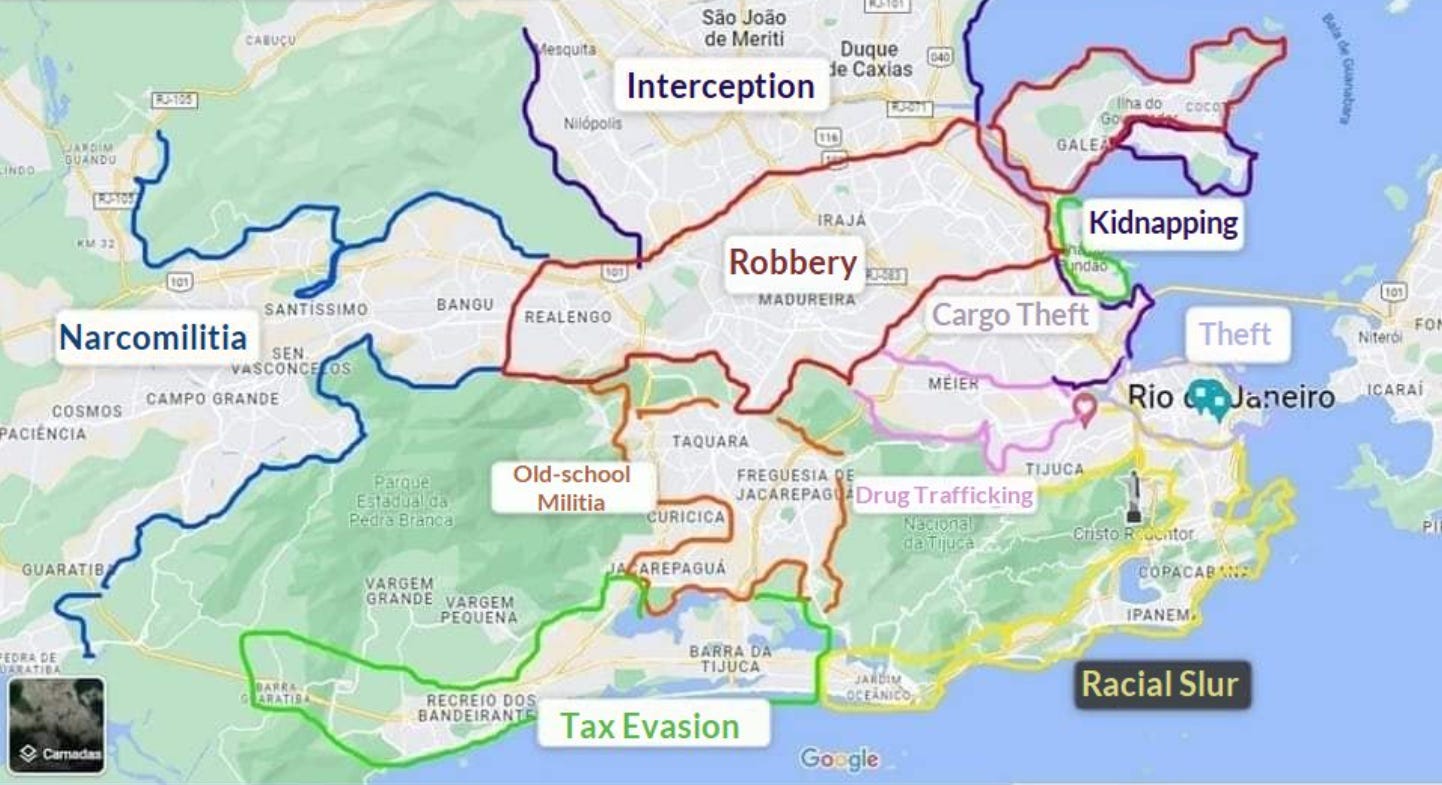
Meme map of Rio de Janeiro’s traditional criminal profile. Once again, Barra and Zona Sul are superior…