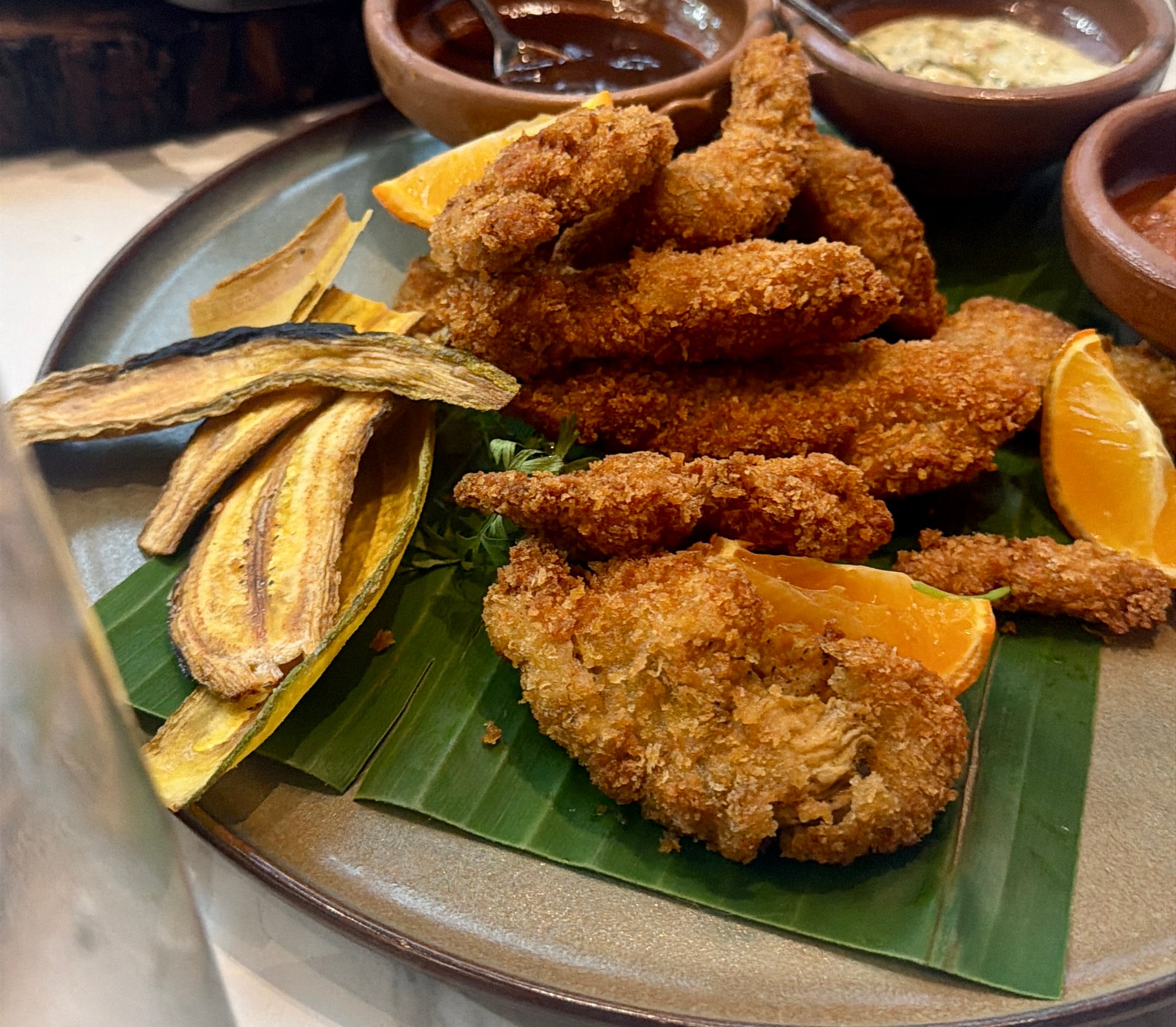

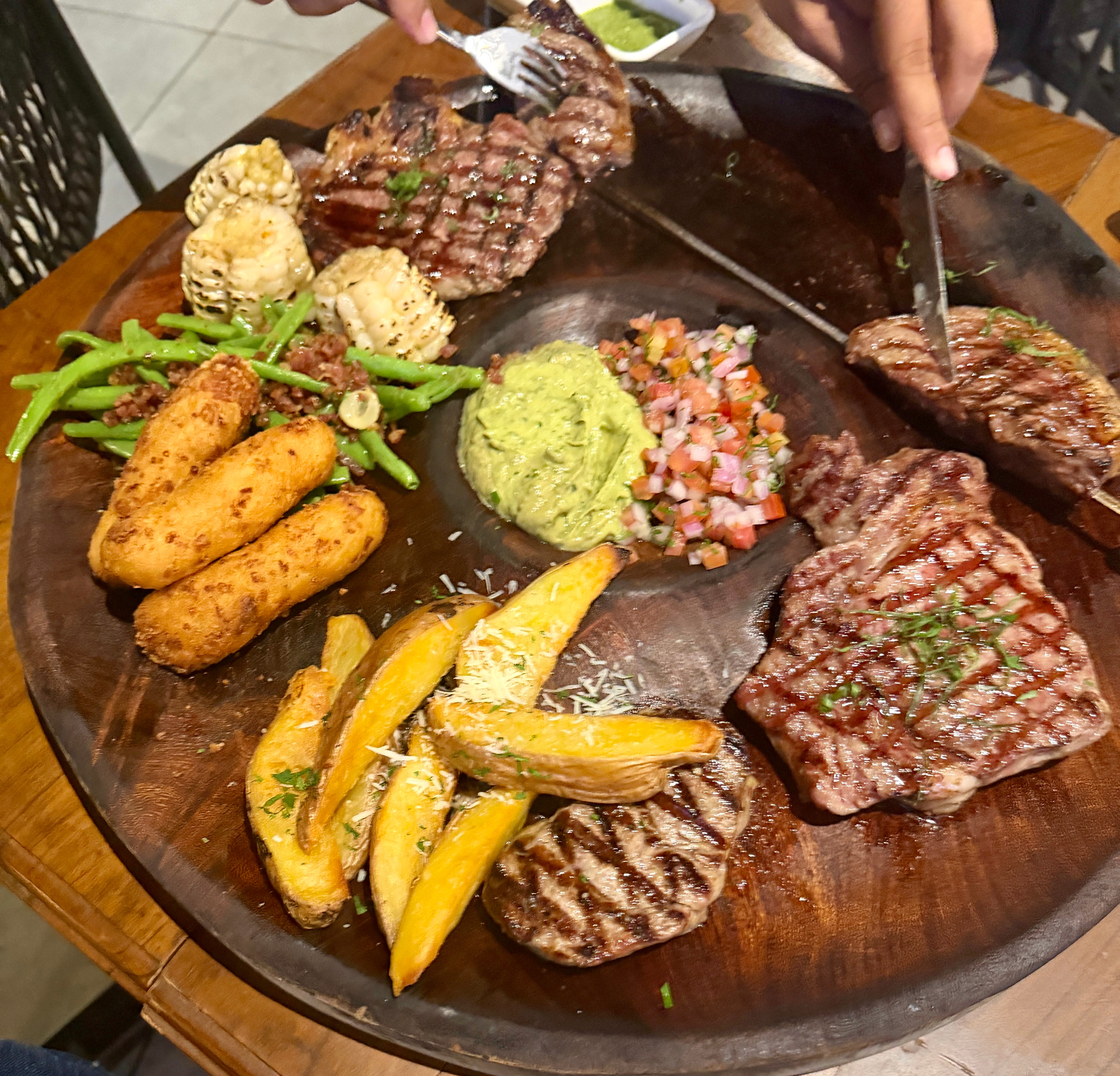
Dinner for two in Equipetrol last month, the legit best barrio in all of Bolivia. Me and my videographer. Steaks, sides, the whole nine yards. $42 USD total. The tables around us were full. People enjoying a nice meal, relaxing.
That same week, Bolivia was under a state of emergency. Roadblocks strangling La Paz, fuel lines, seven weeks of unrest, the president formally declaring the crisis a crisis.
Both of those things were true at once, about 900 kilometers apart.
Only one of them made the news…
I’ve been moving around Latin America since 2014. I’ve never seen a good city hide this well.
This isn’t the Bolivia you’re thinking of
Say “Bolivia” and people picture the altiplano. La Paz at 12,000 feet, thin air, llamas, protests, politics.
Santa Cruz is the opposite of all of it.
→ It’s tropical, not Andean. The city sits at 1,300 feet in the lowlands. Hot, green, flat. It feels closer to interior Brazil than to anything in the Andes, and you’ll be in shorts year round.
→ Camba culture runs the place. The lowland cruceños are commercial, informal, and loud in a friendly way. This is where Bolivia’s agribusiness money lives, and it has spent decades wanting nothing to do with the political culture of the highlands. Different worlds.
→ It’s safer than you’d guess. The good neighborhoods are walkable at night. Bolivia’s national homicide rate sits around 4 per 100,000, which is lower than Panama, Peru, or Costa Rica — and roughly equal to that of the USA. Petty theft exists like anywhere. But the day-to-day vibes in Equipetrol surprise people arriving from Colombia or Brazil.
→ The nightlife is decent. Equipetrol's restaurants hold up — steakhouses that rival Argentina at a third of the price, sushi that isn't cream cheese only. And the nightlife has real range: Tulum is a famous spot, and it earns it, but places like La Rota Carlota — underground, wild, the kind of spot you only find because a local drags you there — are what tell you a city has an actual scene instead of three bars for foreigners. The cruceños are the reason it all works: well-dressed, social, out constantly, and considerably more cosmopolitan than anything the word "Bolivia" prepares you for. Oh, and the women aren’t ugly.
→ Nobody’s sick of you yet. This is the one I can’t stop thinking about. Foreigners are still a novelty in Santa Cruz, which means people are curious instead of jaded. There’s no gringo pricing reflex, no tourist-facing performance, nobody quietly resenting your presence. Twelve years around this region taught me how rare that is — and how fast it disappears once a city gets found.
Now the part that keeps this honest…
Bolivia ended fuel subsidies in December, and shortages have been real ever since. Inflation is high. Anything imported is getting more expensive, not less. The unrest you read about was concentrated in La Paz and the highlands — but it was real, and the cleanup is not finished.
I filmed in Santa Cruz for four days in July. It felt completely normal. We carried around thousands of dollars of camera gear all over the city and never had an issue.
But here’s a glimpse of Santa Cruz de la Sierra, you don’t have to take my word for it:
I’m putting everything I shoot on the ground in Latin America on the Invest LatAm channel. Subscribe here if you want the next one.
And of course, it’s cheap here
But cheap isn’t the hard part.
The equation is: cheap + doesn’t suck + lets you stay.
You just read 500 words of “doesn’t suck.” And here’s the thing about the other two: most cities on the continent fail the first test. The survivors fail the third.
Let’s start with the first. None of the “major” cities in LatAm that expats and nomads flood are truly cheap anymore.
Medellín stopped being the cheap answer years ago, when everybody showed up at once. Roma Norte in Mexico City is not for the faint of heart from a cost perspective. Even Miraflores in Lima has skyrocketed in price — even though the city keeps declaring states of emergency over extortion.
Errr, maybe one was (until 2026). Buenos Aires is an interesting case.
For a decade it was the best deal on the continent, and the exchange rate was the entire story. Nobody’s spending changed. The peso did.
Milei stabilized it and the bargain evaporated — Argentina now has the most expensive Big Mac in the Americas at $6.95, more than the United States.
But that’s the whole mechanism, and it runs both directions.
Argentina fixed its currency and got expensive. Bolivia just floated its currency and got cheaper. Same lever, opposite ends — and one of them happened three weeks before I flew down.
And here’s the part nobody puts together: the same headlines keeping everyone away are the reason your dollars go this far. The crisis isn’t hiding the discount. The crisis is the discount.
So forget the majors.
The honest comparison is the tier below — the cities that are still actually cheap.
The tier 2 cities so to speak…
→ Quito 🇪🇨
Cheap for two reasons, and neither one helps you. First, Ecuador runs on the US dollar. There’s no float coming, so the price you see today is the price. Second, Quito trades at a security discount. Ecuador’s press is brutal because of the cartel wars on the coast, and the whole country wears those headlines even though Quito itself sits calm up in the Andes.
Yes, that’s the same setup as Santa Cruz: quiet city, ugly national news. The difference is what ends it. Bolivia’s crisis is economic, and the repair started three weeks before I landed. Ecuador’s crisis is a drug war, and nobody publishes a timeline for winning one of those.
→ Asunción 🇵🇾
The closest cousin. Lowland, hot, agro money, territorial taxes. It was the answer five years ago. Then people noticed: one-bedrooms re-rated, the guaraní up 24% this year, the discount gone. Asunción is what Santa Cruz looks like five years from now.
→ Barranquilla 🇨🇴
The one that survives everything. Cheap, real city, Caribbean coast, doesn’t suck. Then Colombia taxes your worldwide income at 183 days, and the math stops working.
Santa Cruz beats all three on cost anyway.
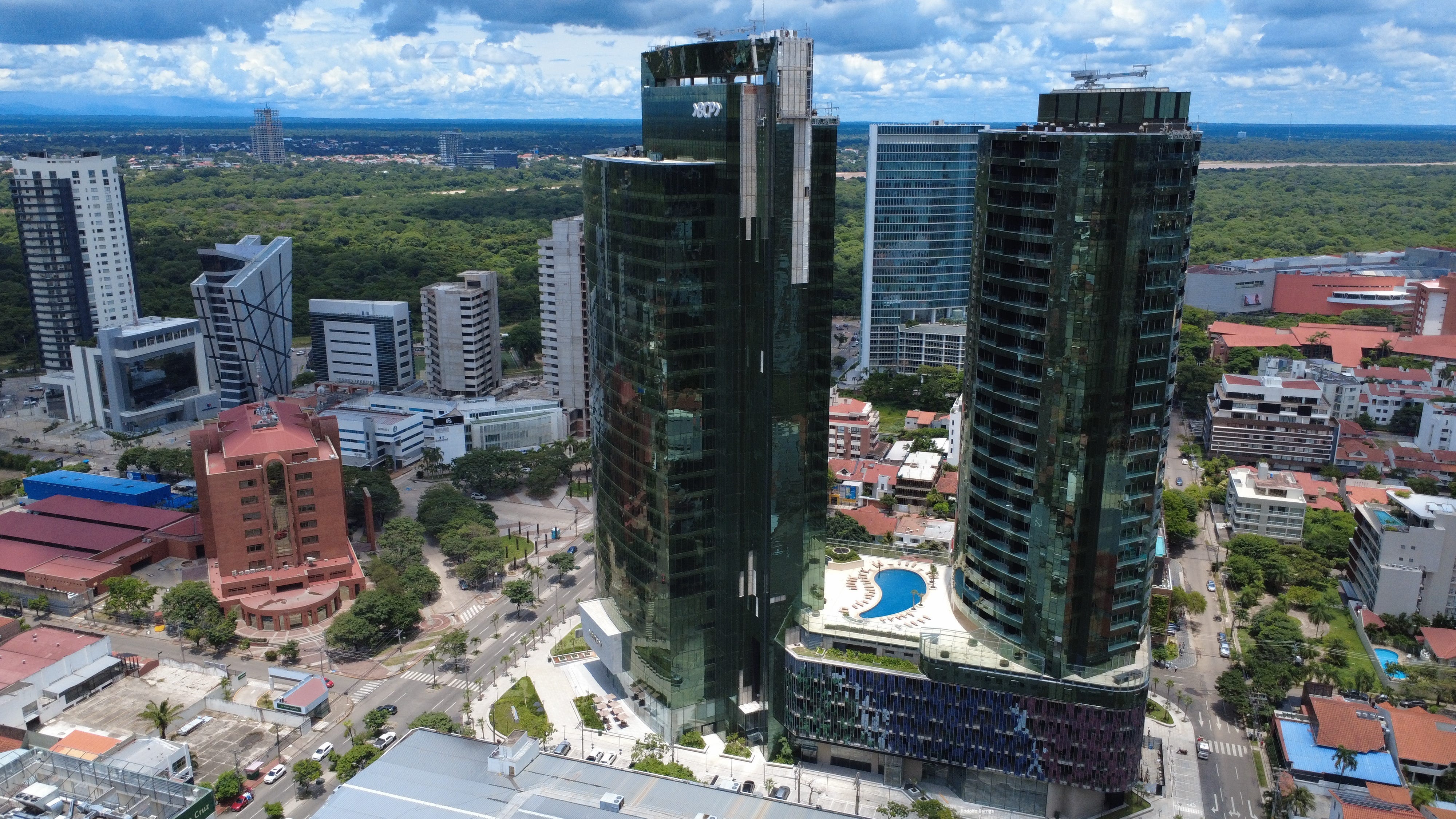
A friend of mine rents one of the nicest one-bedrooms in the city — new tower, full amenities, top of the market — for $700 a month.
That’s the ceiling in Santa Cruz. Or damn near close to it.
And you can actually stay
Bolivia makes it easy for foreigners to reside in the country full-time. Why?
Simple…
→ Territorial taxes
This is where Barranquilla fell apart, so here’s the flip side. Bolivia taxes income earned inside Bolivia and ignores everything else. Your business back home, your dividends, your capital gains — all outside the net.
No 183-day trap, no special regime to apply for, no structure to build.
→ Cheap, fast residency
Government fees run a few hundred dollars. No apostilles, the background check happens locally through Interpol, and solvency is a bank statement showing about $300 a month.
With a lawyer walking it through, you’re done in about a week on the ground. Two years of temporary gets you permanent, and three opens the citizenship track — one of the fastest anywhere.
One caveat worth respecting: absence limits are real, so confirm the current rules before treating this as a paper residency.
And it’s not staying hidden
Because this city has the potential to be the next Asunción, Paraguay 🇵🇾
And we’ve all seen how fast that city has grown post-Covid.
→ A city that keeps doubling
Santa Cruz had around 42,000 people in 1950. The urban area now holds roughly two million.
Some realtors argue more like 4+ million in the department now.
NASA’s Earth Observatory made it a case study in urban expansion because you can watch the rings of new development spread decade by decade from orbit. For seventy-five years, Bolivians have voted with their feet, and they keep voting for the same city.
→ Crypto, because the banks ran out of dollars
Bolivia legalized it in 2024 when the shortage got bad enough, and now it’s just how people move money — even more so since the peg died. Some developers in Santa Cruz quietly take stablecoins for apartments.
Which brings me to the developers…
The part that caught my attention
New one-bedrooms in the best neighborhood in the country start around $40,000 in pre-construction — slightly above that constructed. I flew down specifically to tour them with my camera guy.
A warning first:
There’s no MLS in Bolivia, so every asking price is an opening offer and nobody can pull comps. Price discovery here is manual and slow.
I wrote the full version of this — neighborhoods, the yield math, the contract traps, how residency actually works — as a proper guide over at Invest LatAm.
It’s free, and it’s where I’m publishing most stuff from here on out.
→ Read the: Santa Cruz de la Sierra Investor’s Guide
Que te vaya bien,
Jake Nomada
P.S. I ate fried caiman while I was down there. Locals call it lagarto, it comes from Bolivia’s regulated legal harvest, and it’s better than it sounds.