


Costa Rica got me.
The country got the best of me. Sucked me in. Then spit me out, brittled and bruised.
See what had happened was…
One of my companies was cooking. We’d seen a 400% increase in revenue over the prior 12-months and things looked to continue upwards.
Then we got punched in the mouth.
Our main vendor stopped paying us, threatened to sue us, etc. It took a full month of daily Mexican Modafinil to switch up our vendors and avoid a lawsuit.
The stress was overwhelming. Weekly all-nighters to make sure things got done. Work that would normally take my team 3-4 months, all condensed in one.
And on top of all that jazz, I had two kids in the house — 6- and 18-months old. Two babies, business stress, and a missus who I’d been ignoring while working all damn day and night.
So we decided to book a 5-week trip to Costa Rica. Seemed like an ideal way to unwind and shed some stress.
It was.
We spent a magical month traveling throughout Costa Rica. Lago Arenal, La Fortuna, Playa Flamingo, Tamarindo, and of course San Jose metro area (Santa Ana specifically).
The whole family loved it. We didn’t want to leave. Fast-forward a few months later and we’d booked another 2-month trip to Costa Rica.
That trip led to me spending over 15-months in the country with my family, buying real estate, and planning to base up in Costa Rica long-term.
Then the Costa Rica 🇨🇷 Conundrum™ reared its ugly head.
While Costa Rica is easily one of the best places to vacation in all of Latin America, actually living in the country is a different beast entirely.
Ask any real estate agent in Guanacaste why the vast majority of gringos end up moving back home within 2-years of moving to Costa Rica.
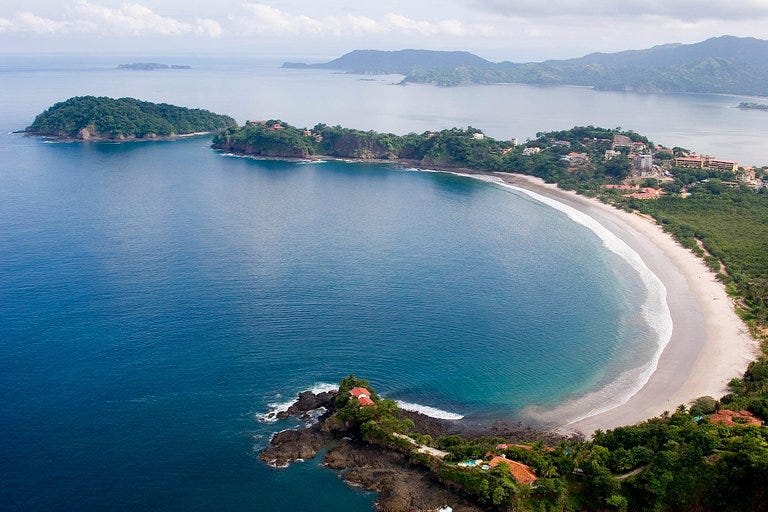
The “Pura Vida” Promise: What Costa Rica Gets Right
“Pura Vida” gets thrown around so much you’d think it’s just a bumper sticker for tourist shuttles.
Surprisingly, it’s not.
I spent 15+ months in this country and can tell you — it is how Ticos actually operate. The cashier at the AutoMercado, the guy fixing your flat tire on the side of the road in Guanacaste, the abuela selling mangoes outside the school. There’s a warmth and ease to daily interactions that I haven’t felt many other places.
As a long-time expat buddy told me, “Pura Vida actually means something to the local people here.” He’s right.
Then there’s the nature, which is frankly absurd.
Costa Rica makes up 0.03% of Earth’s landmass but contains roughly 5% of the world’s species — over 500,000 of them. Highest biodiversity density of any country on the planet.
Caribbean coast on one side, Pacific on the other. Active volcanoes popping out of the earth like God just got bored. Cloud forests in Monteverde that feel like another dimension. Surfing on both coasts. Pristine beaches backed by mountains so green they look AI-generated. They’re not. It’s just Costa Rica.
Now, safety.
The stats have gotten worse — no sugarcoating that. The homicide rate jumped from a stable ~11 per 100K to 16.6 per 100K in 2024, nearly all of it drug-trafficking related.
That said, in 15+ months living there with my family, I never once felt unsafe. The areas where expats actually live — Santa Ana, Escazú, Guanacaste beach towns, Arenal — are calm. The violence is concentrated in port cities like Limón and specific urban zones, not in your gated community in Playa Flamingo.
What sealed it for my family was the practical stuff. At least, that’s what we told ourselves.
Costa Rica is compact — you’re 90 minutes from San Jose to the beach. Two hours to a volcano. Three to a cloud forest. The minimal language barrier helps too. Years of tourism have made English widely spoken, which matters if your Spanish is non-existent, like many of the gringos in the country.
International schools are solid and diverse — kids from everywhere, not just American compounds. There’s even solid international schools in some of the beach towns, like this one.
Oh, and it’s a 4-hour flight to the USA. Practical. Easy.

The Hidden Advantages: Taxes, Healthcare, and Lifestyle
Costa Rica runs a territorial tax system under Law No. 7092 — only income earned inside Costa Rica is taxed. Your US-based consulting revenue, your foreign rental properties, your investment portfolio — Costa Rica doesn’t touch any of it.
For Europeans, Canadians, and Australians without a worldwide taxation system chasing them around the globe, this can mean paying effectively zero income tax on foreign earnings.
For Americans, you still owe Uncle Sam (you always owe Uncle Sam), but the Foreign Earned Income Exclusion covers up to $130K and Costa Rica won’t be double-dipping on top of that. It’s not as clean as Panama or Paraguay for pure tax optimization, but for most expats earning remotely, it gets the job done.
Healthcare in the San Jose metro is good. Really good. CIMA Hospital in Escazú has been JCI-accredited six consecutive times since 2008, carries the Pathway to Excellence nursing certification (only private hospital in Central America with it), and has 800+ physicians across 60+ specialties. Bilingual staff. No wait times for international patients. Procedures run 30-50% cheaper than the US.
Clínica Bíblica and Clínica Católica are also JCI-accredited, giving the metro area three internationally certified hospitals — more than most Latin American capitals. Many of the specialists have trained in the US, Europe, or Chile. If you need serious medical care, San Jose delivers.
And it’s not just the hospitals.
The Nicoya Peninsula is one of only five certified Blue Zones on Earth — alongside Okinawa, Sardinia, Ikaria, and Loma Linda. Stanford research found that Nicoyans over 60 are 29% less likely to die than other Costa Ricans the same age.
The average life expectancy there is 85, compared to 77 in the US. The water is mineral-rich in calcium and magnesium, the diet is beans and maize and not much else, and 100-year-olds still ride horses daily.
Something about this country just keeps people alive.
The Infrastructure Nightmare: Traffic and Roads That Make You Question Everything
Let me describe what driving in San Jose is actually like….
You’re on the highway heading into the city. It starts as a reasonable multi-lane road. Then, with zero warning and no signage that would make sense to anyone who has ever designed a road, the lanes compress from something like eight down to two. Just... shrink.
Cars merge in a panicked swarm. There’s a toll booth smack in the middle of it all, because of course there is.
Crashes happen here constantly — and when they do, the entire city locks up.
According to Numbeo’s 2025 data, Costa Rica ranks second in the world for traffic congestion. Second. Behind only Nigeria.
San Jose’s traffic index of 327.8 puts it just behind Lagos. A 15-kilometer trip from the international airport to La Sabana park averages speeds of 15 km/h during peak hours. You could bike faster. You could probably walk faster if you were angry enough.
Get outside the city and it doesn’t get better — it gets different. Two-lane roads with semi-trucks barreling toward you from the opposite direction, lanes so narrow you instinctively pull your mirrors in. No shoulders. Potholes that could swallow a tire.
Yes, I’ve been side swiped by a semi-truck in Costa Rica. Good times.
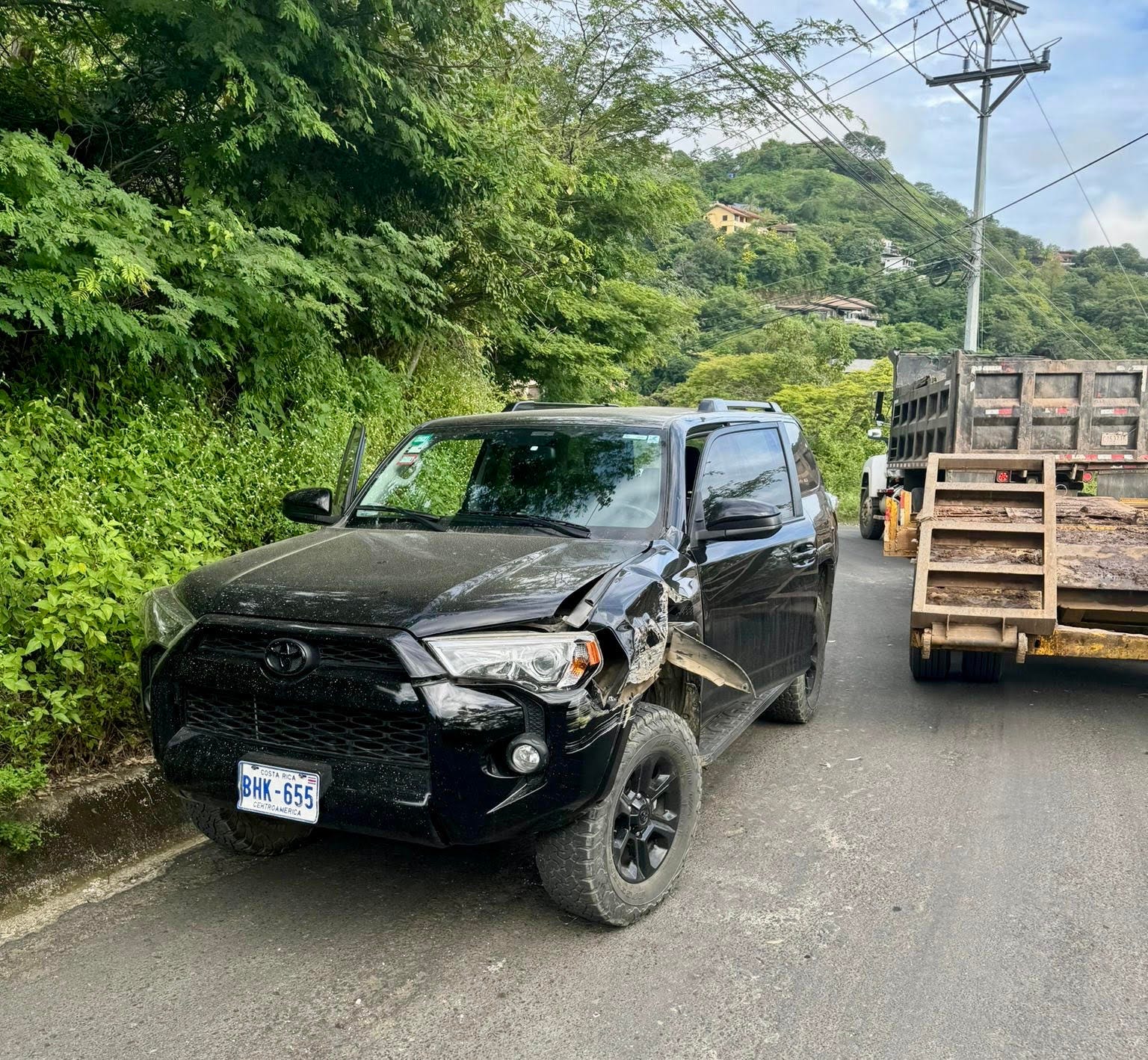
And then, just when you think you’ve escaped civilization’s traffic problems, you hit the one-lane bridges.
These things are scattered all over rural Costa Rica — even on main routes. You pull up, check if anyone is coming the other direction, play chicken with an oncoming truck, and pray. They create traffic jams in places where there are literally more cows than people. Who approved these?
Genuinely — who signed off on a single-lane bridge on a national route and said “yeah, this’ll work”?
The root cause is that Costa Rica simply cannot build infrastructure. The IMF ranks the country 144th out of 162 in average road speeds. Vehicle density has doubled in the past decade while the road network has barely changed.
Some infrastructure projects have taken up to 60 years to complete. There’s talk of an electric train system. There’s been talk for years. The country that nailed biodiversity conservation and built a strong healthcare system in San Jose just... can’t figure out roads. It’s baffling.
What this means in practice: that “90 minutes from San Jose to the beach” pitch from the previous section? On a Friday afternoon, make it three hours. The drive to Tamarindo that Google Maps says is five hours can stretch to eight if there’s a single accident.
Simple errands — groceries, school pickup, a doctor’s visit — become multi-hour operations if you’re anywhere near the metro area during peak hours, which now bleed into basically all hours. The compact country advantage I mentioned earlier is real, but the traffic takes a serious bite out of it.
