


There are three major drawbacks when talking about Punta del Este, Uruguay…
Far far away. It’s not a quick flight from the US, even the direct from Miami is 9+ hours. You’re often connecting through Buenos Aires, Lima, or Panama to get to Montevideo, and the local airport in PDE is small.
Cold weather in the winter. June through August averages around 11°C (52°F). Not freezing, but grey and windy enough to keep you off the beach.
Boring outside high season. A lot of restaurants and bars close. The town empties out. If you need constant stimulation, March through November will test you. Vastly improved in this regard post-Covid, however.
But here’s the thing, outside of those issues, the place is brilliant. Truly one of South America’s better beach cities — at least for families.
You feel safe here. My kids played on the beach without worry. The international schools are solid, healthcare is good for a beach town, and residency is simple. The locals are chill and friendly, Uruguay just has a different energy.
I walked away more than impressed after my first trip to Uruguay’s premier beach destination, pondering if this was the best spot to raise my children in Latin America…or not.
🇺🇾 Punta del Este, Uruguay 🇺🇾
Population:
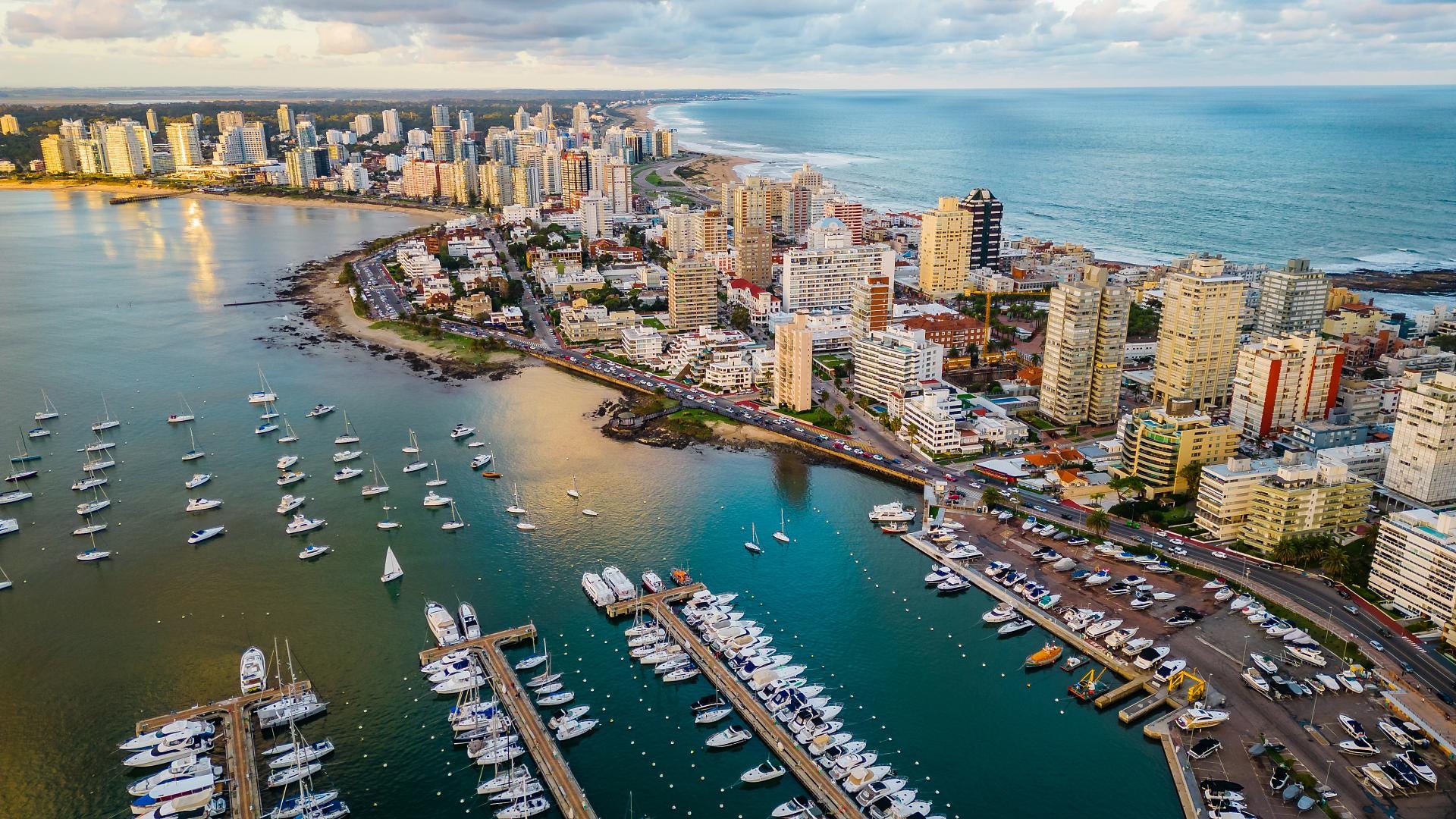
The greater Maldonado metro, which includes Punta del Este, Maldonado city, and San Carlos, is home to roughly 175,000 residents. During the Southern Hemisphere summer (December through February), that number surges past 500,000 as Argentines and Brazilians flood in.
Weather:
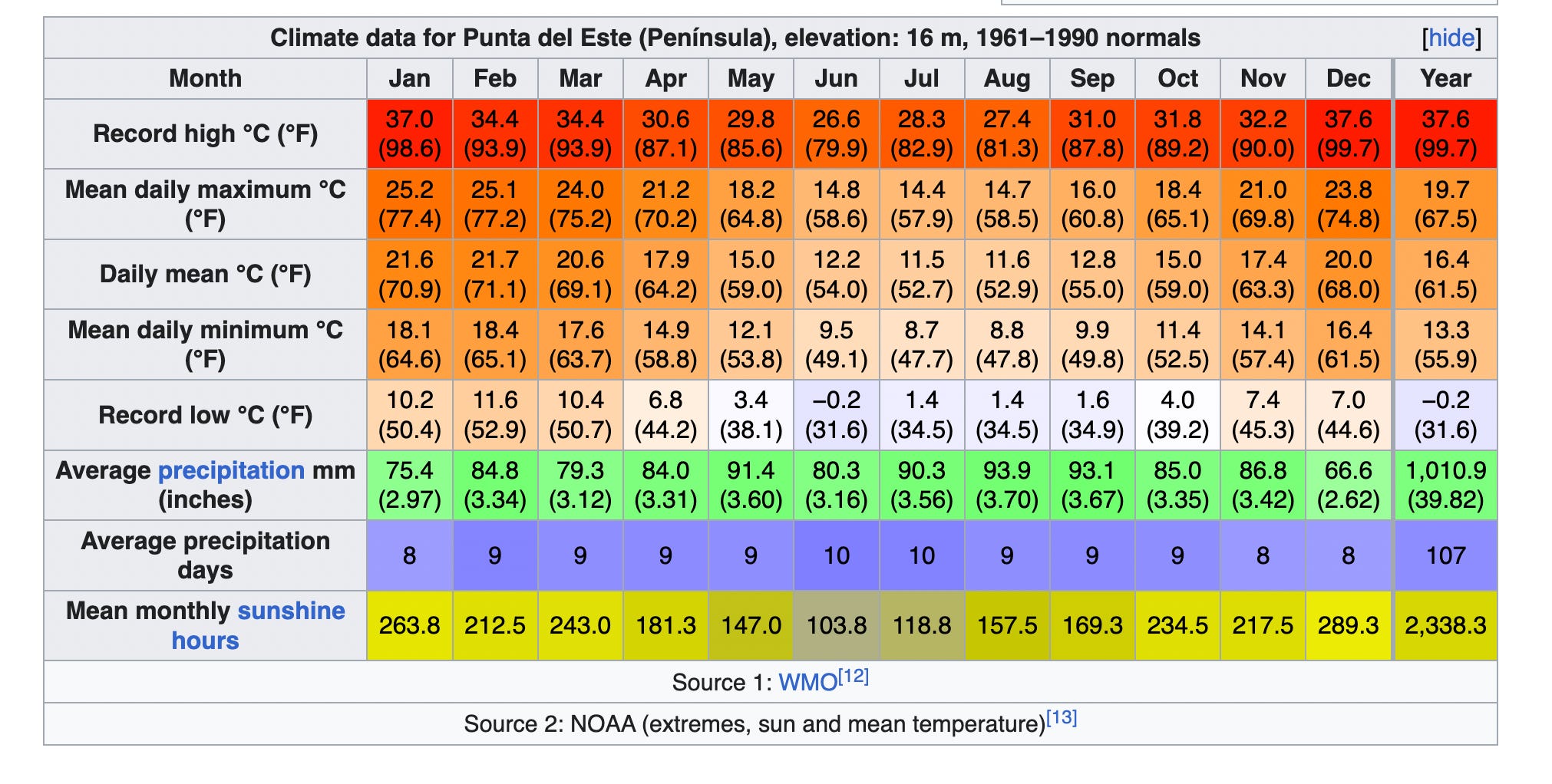
Punta del Este has a mild, oceanic climate with warm summers averaging 22–25°C (72–77°F) and cool winters around 11°C (52°F). It’s windy year-round, rainfall is spread evenly across all months (~1,100mm annually), and the ocean is swimmable from December through April.
If you’re expecting the tropics, this isn’t the place for you…
Basically, you get 4-5 months of beach weather a year in Punta del Este.
Why Visit Punta del Este, Uruguay?
Punta del Este is commonly referred to as “the Hamptons of South America” and the country of Uruguay has been labeled “the Switzerland of South America.”
Both labels seem a bit over the top to me.
The reality? Punta del Este is quite nice. It’s a somewhat glamorous beach town where Buenos Aires money meets Uruguayan calm.
Overall, I dig it.
You’ve got beaches all around, rolling pine forests, great infrastructure, and excellent security. It’s calm and chill, in a good way.
The coastline splits at the peninsula: Playa Mansa offers glassy, family-friendly waters on the river side, and Playa Brava brings crashing Atlantic surf on the other. Then you’ve got the beaches in La Barra across the bridge.
You get good steak and seafood restaurants, the iconic Casapueblo cliffside compound, shopping along Gorlero Avenue, and a nightlife scene that gets wild in high season.
But Punta del Este isn’t just a resort town with beaches, restaurants, and nightlife.
Uruguay’s political stability, strong property rights for foreigners, and favorable tax regime have turned it into a legitimate relocation option for certain expats — specifically for expats with families.
The broader Maldonado metro offers year-round infrastructure post-Covid without resort-town pricing, and Montevideo is just two hours west when you need a capital city.
It’s a little slice of luxury in Latin America with some substance behind it.

How to Get to Uruguay
One of the biggest downsides to Punta del Este, and Uruguay as a whole…
It’s far as hell from everywhere not in the Southern Cone region. Getting to Uruguay requires long flights. Point. Blank. Period.
Flights directly into Punta del Este go into El Jaguel International (PDP) and tend to be seasonal.
Currently, the only direct flights to Punta del Este come from:
Sao Paulo 🇧🇷
Buenos Aires 🇦🇷
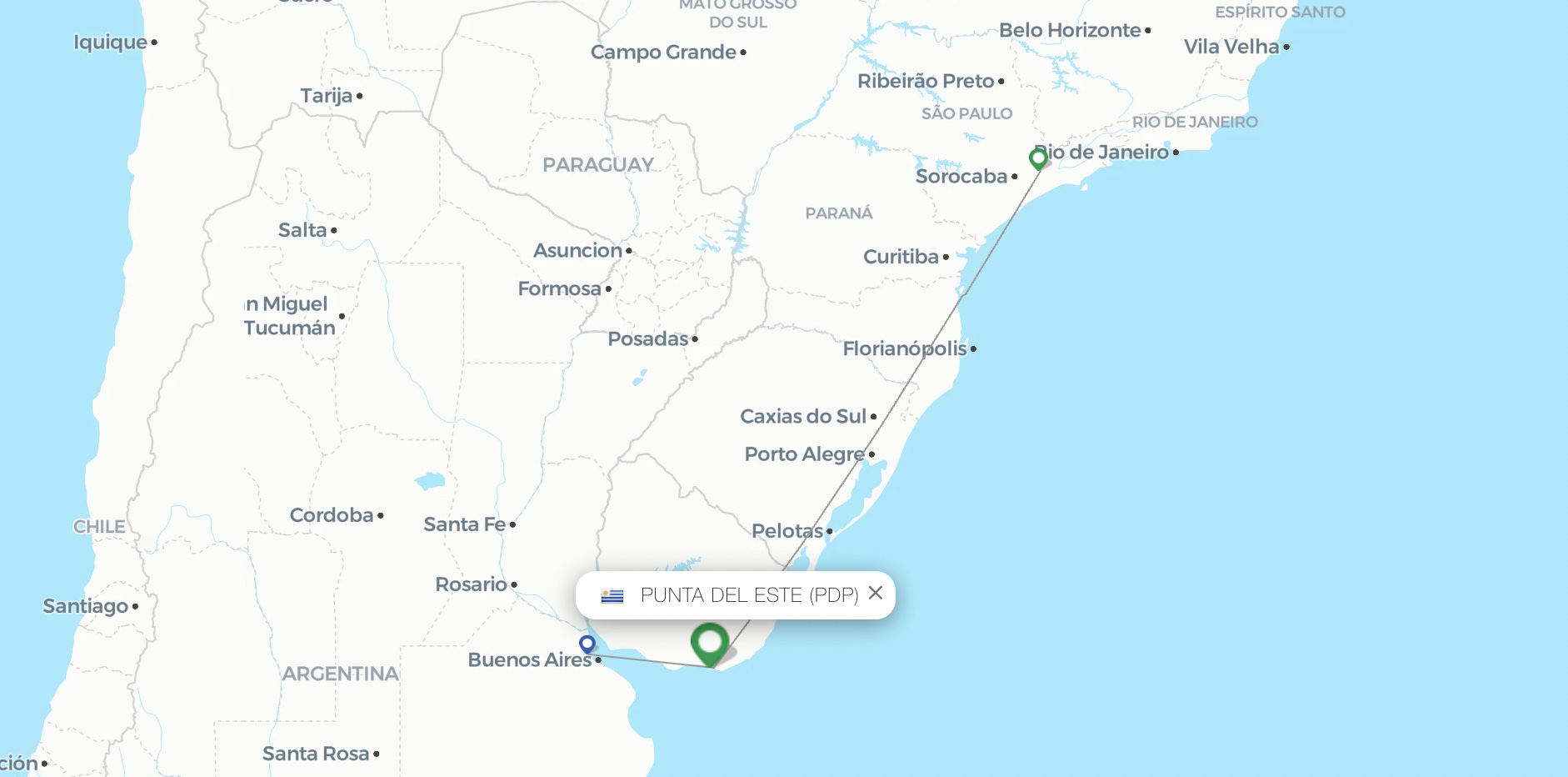
So your direct flight options are very limited.
If you decide to visit Punta del Este, you’ll most likely be flying into Montevideo and renting a car or taking a shuttle to Punta del Este.
This is just the reality of the situation.
Montevideo has more direct flights than Punta del Este, but it’s not that connected of an airport either.
Outside of the Southern Cone region connections, you’ll find a few other options:
Miami 🇺🇸
Panama City 🇵🇦
Bogota 🇨🇴
Madrid 🇪🇸
And the flights to Uruguay will be long-haul flights unless you’re in the Southern Cone already.
7+ hours to Panama and 9+ hours to Miami.
Best Neighborhoods in Punta del Este 🇺🇾
One of the most surprising things about Punta del Este for me…
There’s tons of great neighborhoods.
In most of Latin America, you want to stay in specific areas and neighborhoods. Options are limited due to safety, infrastructure, and overall quality of life.
Take Bogota, Colombia for example:
It’s a massive city of 10+ million in the metro area, but you’d really only want to spend time in Zona T and Parque 93.
Two great neighborhoods for 11+ million people.
Punta del Este is different in this regard. I’d say potentially 80% of the city is livable and the neighborhoods are fantastic.
Just look at my beautiful drawing…
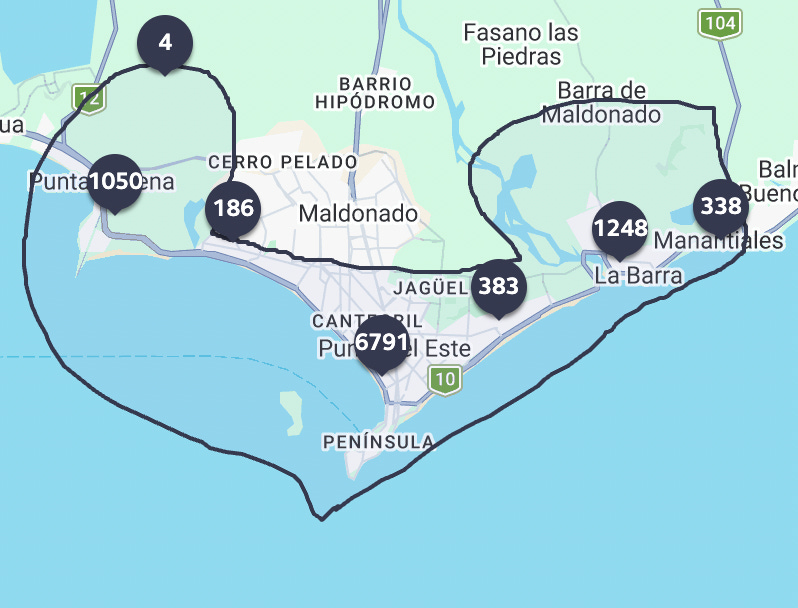
Anywhere inside the drawing I consider to be a nice neighborhood in Punta del Este. Basically 80% of the metro area is great.
Now…
When people say "Punta del Este," they're usually talking about a 40-kilometer stretch of coastline — not just the peninsula itself.
Here's how the neighborhoods throughout the area break down:
The Peninsula
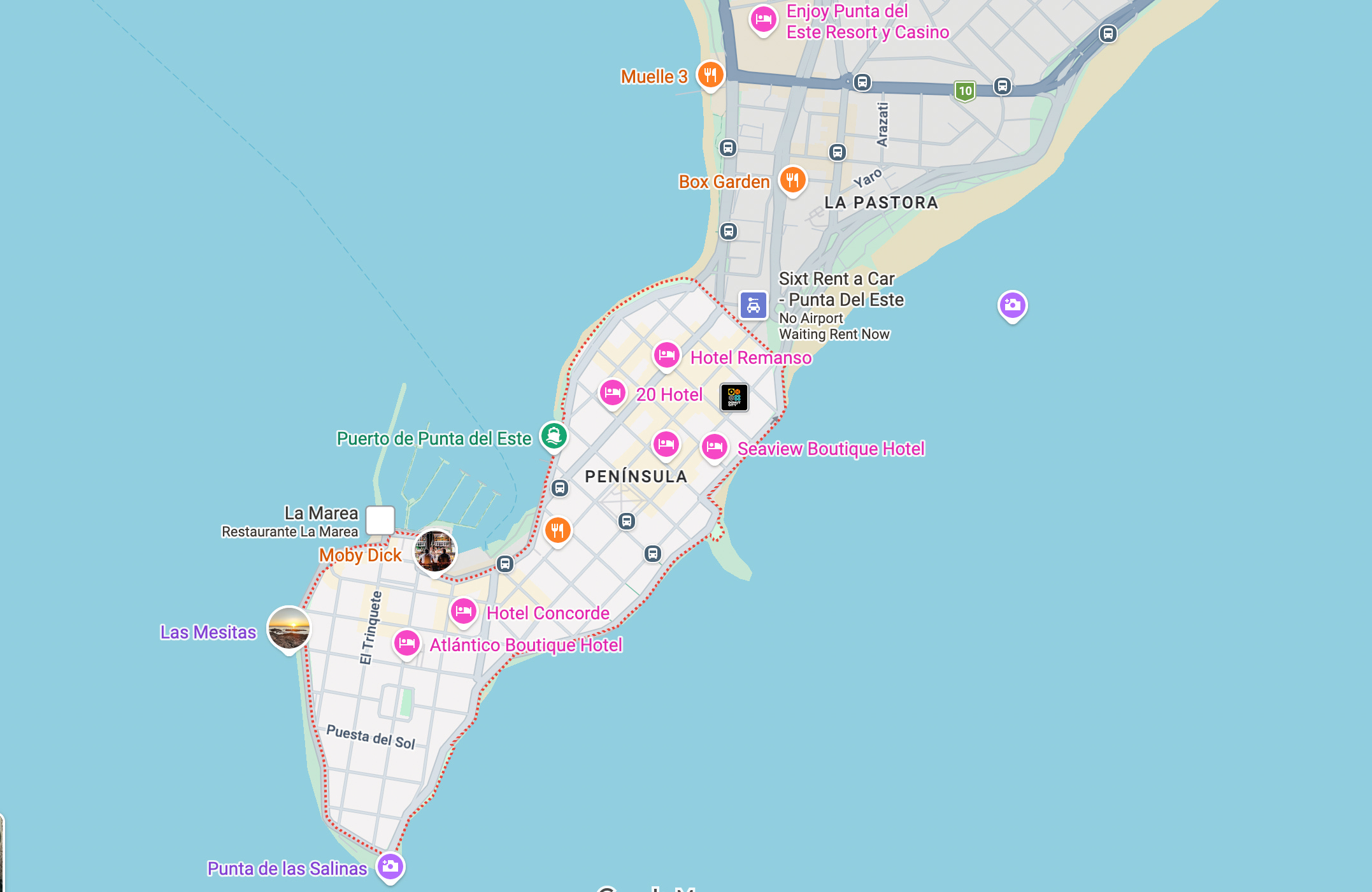
This is the original Punta del Este. It’s the walkable city center where Gorlero Avenue, the marina, the lighthouse, and most of the restaurants and nightlife are concentrated.
There’s also easy access to a number of beaches from here. If you want walkability and don’t need a car, this is your spot.
Playa Brava
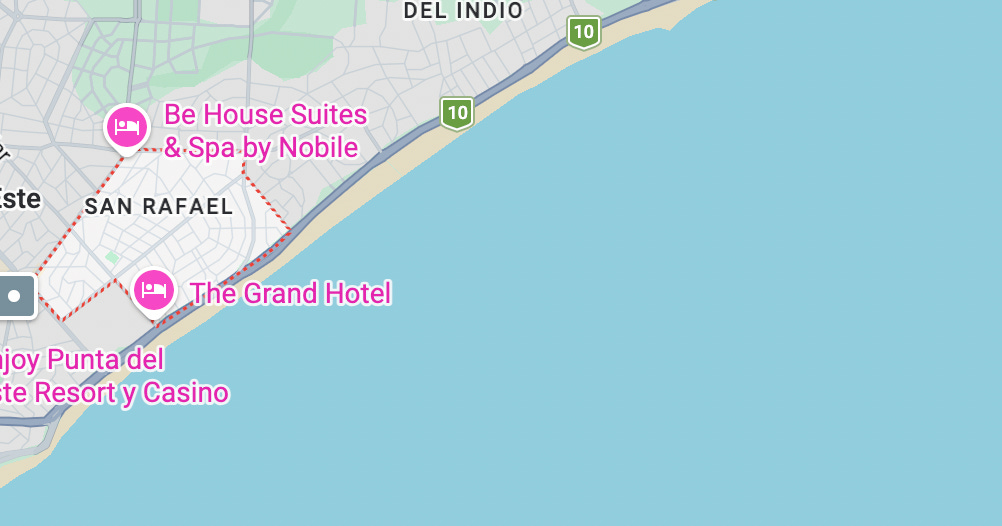
The Atlantic-facing side of the peninsula, Playa Brava is where you’ll find the iconic La Mano sculpture and some of the most impressive high-rise towers in Punta del Este.
The surf is rougher here and the real estate skews more towards luxury. This stretch draws a younger, more glamorous crowd during high season.
Playa Mansa / Roosevelt / Aidy Grill
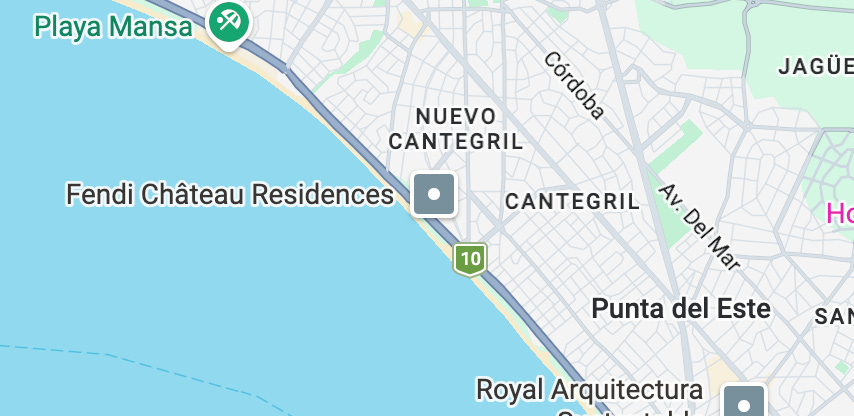
The residential backbone of the area. These neighborhoods sit along the calm, western-facing coastline and offer a more relaxed, year-round lifestyle.
Roosevelt in particular has supermarkets, pharmacies, schools, and restaurants that stay open outside of high season. This is where a lot of full-time expats actually end up.
Many of the top private schools in the area can be found in these neighborhoods or nearby.
La Barra
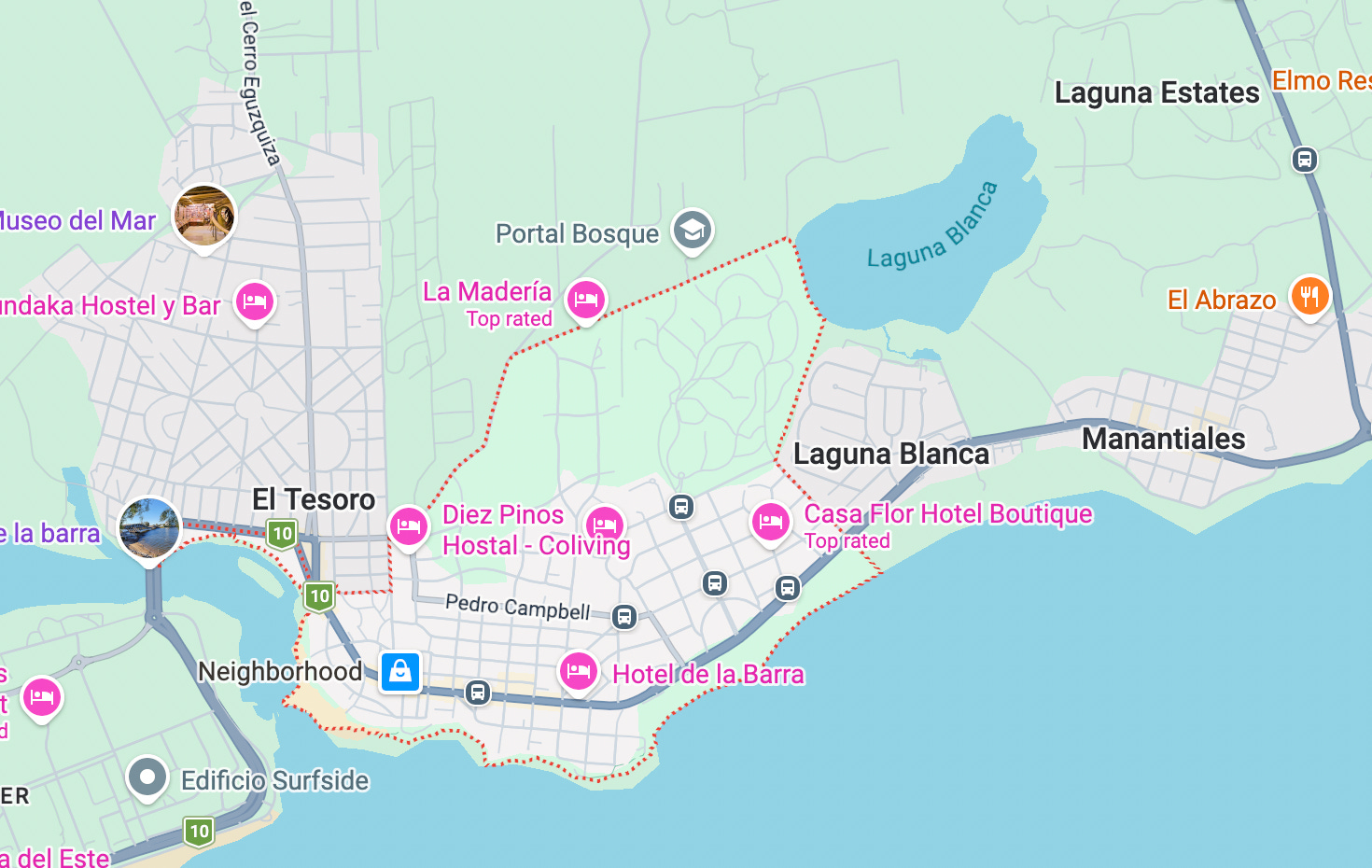
Cross the iconic wavy bridge (Puente Leonel Viera) and the vibe shifts completely. La Barra is the bohemian, artsy counterpart to the peninsula, with colorful streets, surf shops, boutique galleries, and some of the best restaurants in the region.
It’s quieter in the off-season and absolutely buzzing from December through February. The beaches here — Montoya, Bikini, Manantiales — are among the best on the coast.
If you’re younger, creative, or just prefer a more laid-back energy, La Barra is the move.
There’s also a number of private schools here and La Barra has become increasingly popular with families.
Manantiales
Just east of La Barra, Manantiales is the emerging area that’s drawing serious attention. It’s quieter and more understated, with newer developments, a growing food scene, and slightly lower prices than the ultra-premium areas nearby.
Punta Ballena
West of the peninsula, Punta Ballena is home to the famous Casapueblo. The whitewashed cliffside compound was built by artist Carlos Páez Vilaró. The area offers stunning sunset views, larger properties, huge pine forests, and a quieter, more residential feel. It attracts a slightly older, more settled crowd.